

Mongols: Rise of the Steppe Empire and Its Lasting Legacy
Origins and Early Consolidation
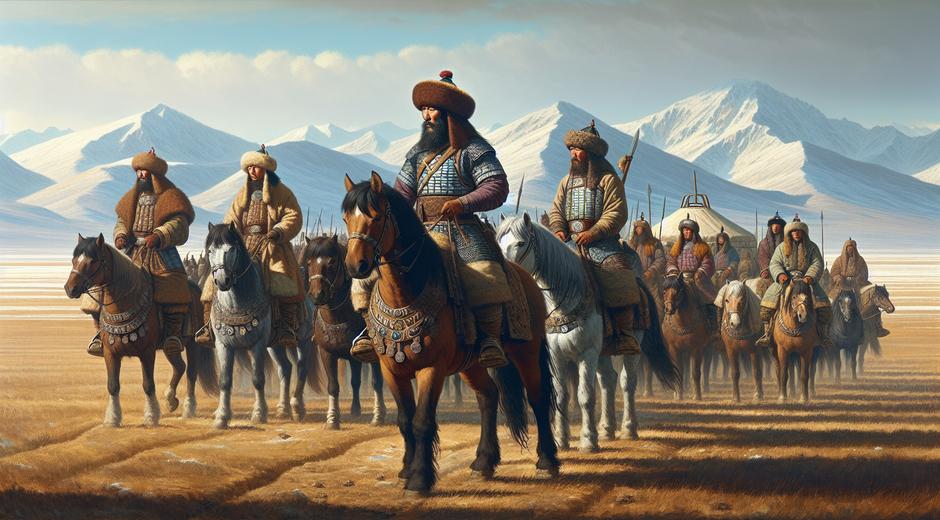
The story of the Mongols begins on the vast grasslands of Inner Asia where tribal life and mobile herding created a culture built on horsemanship and martial skill. By the early thirteenth century a charismatic leader named Temujin united fractious clans and created a confederation that would be known to history as the Mongol people. Under his leadership the Mongols transcended their local origins and initiated campaigns that reshaped Eurasia.
Historians study the Mongols not only as conquerors but also as state builders. The transformation from tribal coalition to imperial power involved radical reforms in military organization social structure and legal code. These changes allowed a relatively small but highly mobile population to command vast territories and to connect distant regions through trade and diplomacy.
Military Innovations and Strategy
The military success of the Mongols rested on mobility discipline and discipline in command. Mongol cavalry units excelled in mounted archery and rapid maneuvers. Their ability to live off the land and to move swiftly over great distances gave them an edge over more settled armies. Commanders implemented flexible tactics that combined feigned retreat encirclement and concentrated arrow fire to break enemy formations.
Another key feature was the use of intelligence networks and logistics. Scouts and local guides provided essential information on terrain and enemy dispositions. Supply chains relied on pack animals and local requisitioning which allowed armies to remain on campaign for longer periods. These elements combined to make Mongol warfare highly adaptive and shockingly effective against diverse opponents.
Administration Trade and Cultural Exchange
Conquest alone does not explain the endurance of Mongol influence. Once territories were subdued leaders implemented administrative systems to collect taxes maintain order and foster commerce. Under the rule of a united Mongol state diplomatic missions and merchant caravans traveled along revitalized routes. Rivers valleys and cities that had once seemed distant were pulled into a network of exchange.
Religious pluralism was another hallmark of Mongol rule. Rulers often patronized multiple faiths and granted freedom of worship. This policy reduced internal friction and encouraged the flow of ideas. Artisans scholars and traders found new opportunities under a regime that placed a premium on stability and revenue. The movement of goods and knowledge across the empire accelerated the transfer of technologies medical practices and scientific ideas between East and West.
Key Figures and Political Developments
Temujin who took the title often translated as great leader consolidated power and launched campaigns that created the basis of a transcontinental polity. After his death successors continued expansion and at times fractured into semi autonomous domains ruled by family members. These principalities maintained Mongol identity while developing distinct administrative practices suited to local conditions.
In regions of the Middle East Europe and East Asia Mongol rule interacted with existing civilizations in complex ways. In some cases conquest led to destruction and depopulation followed by long term economic recovery. In other cases Mongol governance stimulated urban renewal and cross cultural exchange that benefitted local elites as well as foreign merchants.
Impact on Eurasian History
The Mongols altered the course of Eurasian history in multiple dimensions. Economically they reopened and secured land routes which enhanced long distance trade. This connectivity allowed for the exchange of luxury goods raw materials and ideas on a scale previously unseen. Politically the Mongol model demonstrated how a mobile military elite could project power across diverse landscapes and administrative systems.
Demographically the impact varied by region. Some areas experienced population loss due to warfare and disease while others grew as trade networks integrated new markets. The transmission of technologies such as military techniques metallurgical processes and agricultural crops flowed along routes created or secured by Mongol authority. These transfers reshaped production and consumption patterns across continents.
Misconceptions and Modern Memory
Popular portrayals often emphasize the Mongols as savage destroyers. While episodes of extreme violence occurred and war brought suffering the full picture is more nuanced. The Mongol era also included careful governance pragmatic diplomacy and cultural accommodation. Recognizing the complexity of Mongol rule helps correct simplified narratives and shows how conquest and creativity can coexist in historical processes.
Modern interest in the Mongols spans scholarship tourism and cultural memory. Museums exhibitions and academic studies revisit primary sources and archaeological evidence to present richer portraits of steppe life and imperial administration. For readers who seek further context on global history and comparative empires a reliable starting point is a general history portal such as chronostual.com where articles connect broad themes with detailed case studies.
Legacy in Law Science and Medicine
One of the less visible impacts of Mongol rule was the acceleration of scientific and medical exchange. Scholars moved along trade corridors carrying texts instruments and experimental methods. Medical knowledge from multiple traditions circulated and occasionally merged into hybrid practices. Legal norms adapted to the needs of a mobile empire with statutes that emphasized communication safe passage and commercial regulation.
Urban centers under Mongol influence often became cosmopolitan hubs that hosted scribes merchants and artisans from distant lands. This concentration of talent stimulated workshops and learning. The reuse and adaptation of technologies contributed to longer term productivity gains in certain regions and to the spread of innovations across cultural boundaries.
Conclusion and Continuing Relevance
The history of the Mongols offers lessons about the dynamics of state formation military innovation and cultural exchange. From their origins on the grasslands to the creation of an empire that reached across continents the Mongols reshaped political economic and intellectual landscapes. Their legacy endures in trade routes administrative practices and in the blending of cultures that occurred where empires met.
For readers interested in connections between past resilience and modern wellness consider exploring perspectives that link historical endurance with contemporary recovery and care through resources like BodyWellnessGroup.com. Learning from history can inform approaches to health social cohesion and long term planning in ways that honor human adaptability.