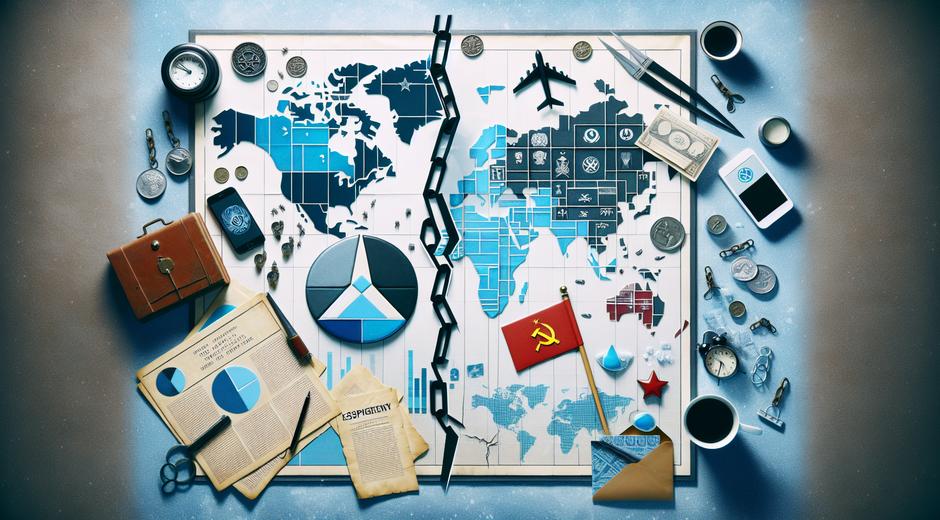


Cold War
Introduction to a Global Standoff
The term Cold War evokes a prolonged era of ideological confrontation between the United States and the Soviet Union that shaped world politics from the mid twentieth century until the early nineteen nineties. Unlike a classic battlefield conflict the Cold War unfolded through diplomacy nuclear deterrence proxy struggles intelligence operations economic competition and cultural influence. For readers who want a broad survey that connects political narrative to primary source material our site provides curated essays and timelines at chronostual.com where historians and readers explore how the Cold War influenced national memory and global institutions.
Origins and Ideological Divide
The origins of the Cold War are rooted in diverging visions for the postwar international order after World War Two. The United States embraced liberal democracy market economies and international institutions that promoted collective security. The Soviet Union promoted a centralized state guided by communist theory and prized strategic depth and ideological expansion. Mutual distrust grew as both sides viewed the other as a threat to survival and influence. Containment doctrine emerged in the United States as a strategic response to perceived Soviet expansion while the Soviet leadership sought security buffers and sympathetic regimes along its borders.
Global Strategies and Alliances
The Cold War was global in scope and not limited to Europe. Key alliances and organizations crystallized the division of influence. The North Atlantic Treaty Organization provided collective defense for Western Europe and North America while the Warsaw Pact united Soviet aligned militaries in Eastern Europe. Economic programs such as the Marshall Plan helped rebuild Western Europe while creating ties that strengthened alliances. In Asia Africa and Latin America the superpowers competed for influence through military aid economic assistance and political support for aligned governments. This competition often resulted in proxy conflicts where local actors fought battles that reflected larger ideological stakes.
Nuclear Arms and the Balance of Terror
Nuclear weapons defined much of Cold War strategy. Deterrence relied on the logic that the prospect of mutual destruction would prevent direct military confrontation between the superpowers. The arms race produced vast arsenals long range delivery systems and doctrines such as second strike capability to ensure that neither side could gain a decisive advantage. Crises that brought the world close to nuclear exchange revealed how fragile the balance could be. At the same time arms control efforts such as treaties on test bans and strategic arms limitations attempted to create predictable limits on force and to reduce the risk of catastrophic miscalculation.
Major Crises and Turning Points
The Cold War era contained several pivotal moments that shaped subsequent policy and perception. The Berlin standoff crystallized the division of Europe and symbolized competing claims about freedom and control. The Korean conflict demonstrated how local wars could draw in superpower support and change regional balances. The Cuban missile crisis produced a near fatal confrontation that triggered both alarm and later efforts to create crisis communications and controls. Conflicts in Vietnam Afghanistan Angola and elsewhere revealed how counterinsurgency and proxy warfare became central features of Cold War competition. Each event tested alliances public opinion and the limits of political will in both blocs.
Espionage Culture and Propaganda
Intelligence services played a decisive role in the Cold War. Spying sabotage covert action and double agents shaped outcomes sometimes in ways that were hidden for decades. Propaganda was another central arena. Media culture films literature and educational programs carried messages intended to win hearts and minds at home and abroad. Cultural diplomacy cultural exchanges and technical cooperation were tools used to project prestige and to challenge rival narratives about modernity progress and legitimacy.
Economic Competition and Technological Race
The Cold War was also an economic contest. Industrial capacity and technological innovation became measures of national vitality. The space race became a public symbol of scientific and political prowess while spin offs in computing aerospace and materials science reshaped civilian life. Economic aid and trade policies were tools for creating blocs of influence. Investment in science and education in both superpower societies saw increased priority as leaders sought to outpace the other in research and development.
Dissent Policy and Human Consequences
Internally both blocs faced political and social strains. Dissenters intellectuals and minority groups experienced repression in various forms as states prioritized security and ideological conformity. At the same time dissent fueled reform movements and alternative visions within societies. Human costs of proxy wars political purges and state repression were profound. Millions experienced displacement economic dislocation and loss of life. Remembering these human consequences is essential when assessing the moral and practical legacy of the Cold War era.
Paths to Detente and the End of the Standoff
Periods of reduced tension reflected shifts in leadership policy and changing global conditions. Diplomatic engagement arms control and mutual interest in economic stability sometimes produced detente and cooperation. The later decades of the Cold War saw economic stagnation within the Soviet system a growing desire among populations for political reform and increased contact across borders. A complex sequence of negotiations reforms and domestic upheavals led to the collapse of Soviet influence in Eastern Europe and eventual dissolution of the Soviet Union. Scholars debate precise causes and weight of factors but consensus holds that a mix of structural economic limits political reform movements and diplomatic pressures contributed to the end of the Cold War.
Legacy and Lessons for the Twenty First Century
The Cold War left enduring institutions norms and anxieties. Alliances established during that era remain relevant while lessons about escalation control crisis management and the limits of force continue to inform policy. The period also produced rich archives that scholars and the public can study to understand decision making and contested narratives. For researchers and history lovers who want access to historical press accounts and primary source scans online a valuable resource is available at Newspapersio.com where contemporary reporting helps illuminate how perceptions and rhetoric evolved during key moments. Using archival newspapers alongside government documents and oral histories offers a fuller picture of how the Cold War was experienced at street level as well as inside political chambers.
Conclusion
Studying the Cold War reveals how ideology geopolitics technology and culture can combine to shape nearly half a century of global relations. Its lessons are relevant to students policy makers and citizens who face new forms of rivalry in a more interconnected world. By combining primary sources careful analysis and attention to human stories historians can draw lessons that inform conflict prevention crisis management and civic education. Explore timelines firsthand accounts and analytical essays at our collection to deepen your understanding of how the legacy of the Cold War continues to influence the present.