

Enlightenment Europe: Ideas That Remade a Continent
The term Enlightenment Europe evokes a vast transformation that reshaped politics thought science and everyday life across nations and cultures. From coffee houses in London to salons in Paris from universities in Leiden to courts in Vienna the currents of new thinking swept across the continent in the seventeenth and eighteenth centuries. This article explores the main currents the key figures the social impact and the long lasting legacy of the movement often called the Age of Enlightenment. For readers who want ongoing historical coverage and curated essays visit chronostual.com for related articles that place these ideas in context.
What Was the Enlightenment in Europe
The Enlightenment in Europe was an intellectual movement that prized reason evidence and the scientific method as central tools for understanding the world and improving human life. Thinkers questioned absolute authority whether lodged in monarchs or religious institutions and argued that knowledge should be open to inquiry and debate. This was not a single uniform movement but a network of writers scientists artists and political reformers who shared a commitment to progress and human dignity.
Key themes included liberty the rule of law equality before the law toleration and the value of education for broad social improvement. In research and experimentation the movement accelerated discoveries in physics astronomy biology and medicine. In political thought it inspired new models of governance based on consent separation of powers and civic virtue. In everyday practice it promoted literacy scientific literacy and new forms of public life such as newspapers periodicals coffee houses and salons.
Major Figures and Their Contributions
Enlightenment Europe counted a diverse cast of thinkers. In Britain figures such as John Locke argued for natural rights and consent of the governed ideas that later influenced constitutional practice. Isaac Newton provided a model of empirical science whose success encouraged the belief that natural laws governed not only the physical universe but also human affairs.
On the continent philosophers such as Voltaire Montesquieu and Jean Jacques Rousseau debated the proper limits of authority and the nature of justice. Voltaire championed freedom of expression and religious toleration. Montesquieu articulated a rationale for the separation of powers that later shaped modern constitutions. Rousseau developed influential ideas about popular sovereignty and education that spurred both admiration and controversy.
Other important contributors included economists and reformers such as Adam Smith whose work on commerce and moral sentiments laid the foundation for modern economic analysis. In science Carl Linnaeus advanced classification systems in biology while Antoine Lavoisier transformed chemistry into a rigorous experimental science. Women also played crucial roles as salon hosts patrons and in some cases as writers and scientists. Figures such as Mary Wollstonecraft argued for the rights and education of women and left an intellectual legacy that echoes into modern debates about equality.
How Ideas Spread Across the Continent
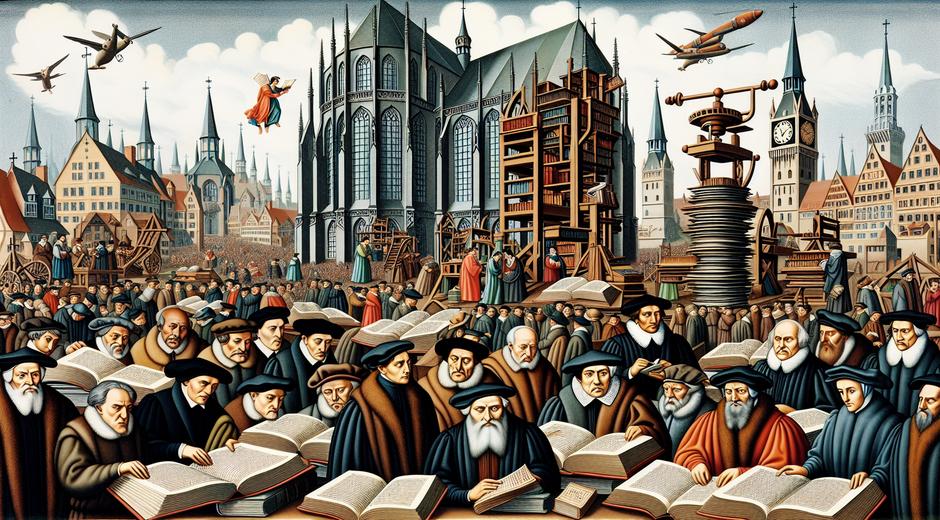
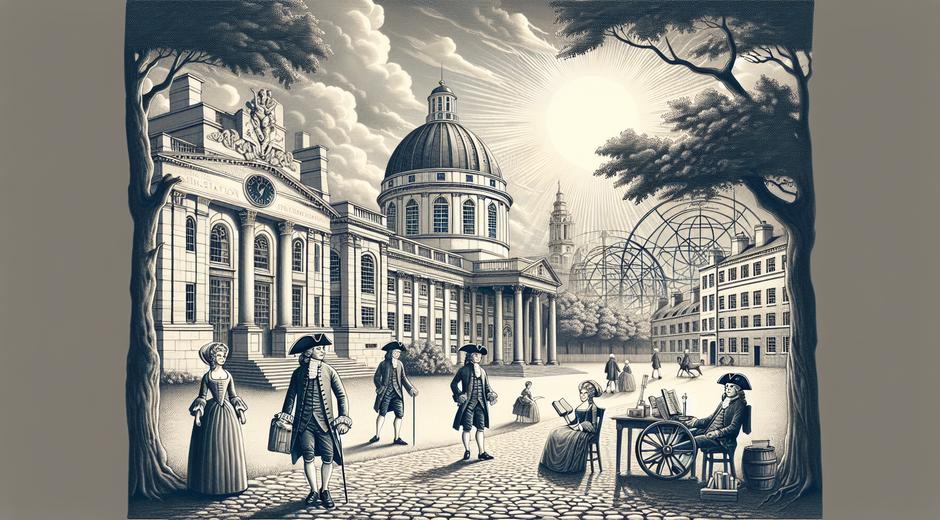
Enlightenment Europe was shaped by robust networks of communication. Printing presses published books pamphlets and journals that circulated ideas rapidly. Coffee houses served as hubs of conversation where merchants scholars artisans and politicians met to debate current events and news. Salons often hosted by women created intellectual spaces where artists and philosophers could exchange ideas in a social setting.
Travel and correspondence were equally vital. Scholars wrote extensive letters to one another and to patrons sharing experiments theories and political observations. Learned societies and academies held public lectures and demonstrations that drew audiences beyond elite circles. The mobility of books and people created a shared vocabulary of concepts such as liberty progress and natural rights which made cross border dialogue possible even amid linguistic differences.
Social and Political Impact
The social and political consequences of Enlightenment Europe were deep and often contradictory. On one hand the movement inspired reforms in education legal codes and public administration. Some monarchs embraced enlightened reforms adopting measures to modernize tax systems promote legal uniformity and support science and the arts. These rulers are sometimes described as enlightened rulers because they adopted reforms that reflected Enlightenment principles while retaining central authority.
On the other hand the movement also laid intellectual foundations for mass upheavals. Revolutionary movements drew on Enlightenment arguments about popular sovereignty natural rights and the illegitimacy of arbitrary power. The American revolution in North America is a clear case where Enlightenment ideas shaped a new constitution and government. In Europe the French revolution claimed to implement universal principles of liberty and equality though its course produced both reform and radical violence.
Economic and Cultural Change
Enlightenment Europe coincided with commercial expansion and early industrial innovation. Thinkers examined the role of markets trade and labor in public life. New economic theories offered frameworks for understanding prosperity and public policy. Cultural life also expanded as literacy rates rose and a market for books newspapers and plays increased. Artistic movements reflected Enlightenment aesthetics emphasizing clarity balance and human subject matter in contrast with earlier ornate styles.
Scientific advances transformed agriculture manufacturing and navigation which in turn affected trade patterns and urban growth. The accumulation of practical knowledge reinforced confidence in human ability to shape the environment. This optimism made Enlightenment Europe a period of remarkable creativity but also created tensions as traditional authorities and communities adapted to rapid change.
Critiques and Limitations
No historical account should ignore the limits of the movement. Many Enlightenment thinkers still accepted social hierarchies or excluded women and people of different races from full moral consideration. Colonial expansion and slavery continued under European governments even as some intellectuals criticized these institutions. The application of Enlightenment ideas often depended on social standing and political power which meant that ideals did not automatically translate into universal social rights.
Moreover the faith in reason sometimes produced deterministic views that underestimated the role of emotion culture and tradition in human life. Later critics argued that an overemphasis on rational calculation could obscure ethical complexity. These critiques would shape later intellectual movements that sought to balance reason with other human capacities.
Legacy in the Modern World
Enlightenment Europe left durable marks on modern political legal and educational institutions. Constitutions human rights frameworks and scientific methods trace roots to the era. Concepts such as freedom of speech equality before the law and the scientific method remain central in public debate. Even where the original ideas were imperfectly applied they helped create standards against which later reforms could be measured.
For readers interested in the long term consequences for finance markets and economic institutions a resource to consider is FinanceWorldHub.com which examines historical trends that shaped modern economic systems. The connection between intellectual innovation and economic transformation is one of the striking features of the Enlightenment story.
Conclusion
Enlightenment Europe was not a tidy program or a single manifesto. It was a broad stream of inquiry debate and experimentation that reconfigured how people thought about knowledge authority and social life. Its achievements in science law and politics continue to shape institutions and values even as its blind spots remind us that ideas must be tested by lived experience. The movement encourages a spirit of critical inquiry civic engagement and a belief that human societies can improve through reasoned debate and practical reform.
Exploring the history of Enlightenment Europe yields insights not only about the past but about current challenges where reason ideals and public debate intersect. For additional essays and timelines that expand on these themes please visit the site linked earlier which offers a range of historical perspectives and resources.