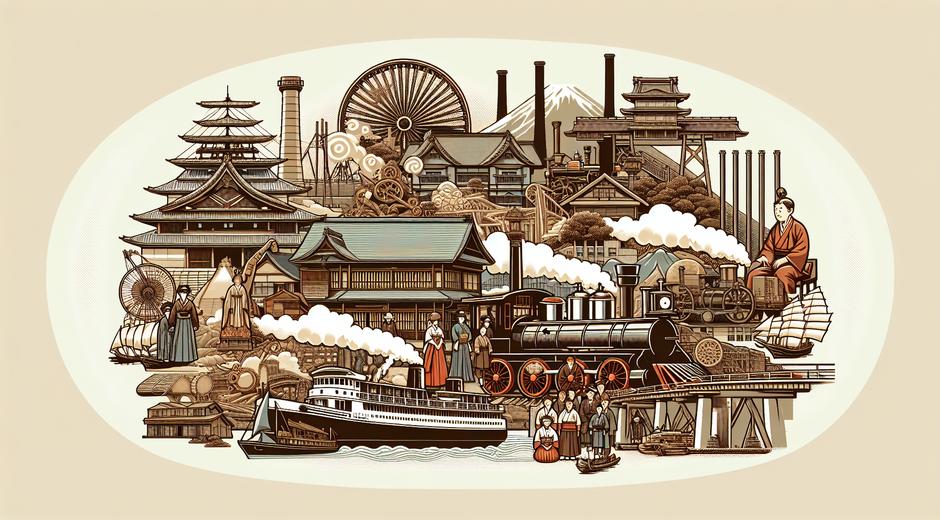


Meiji Restoration
The Meiji Restoration stands as one of the most transformative periods in Japanese history. Beginning in the year 1868 this movement restored political power to the emperor and set Japan on a rapid path from a feudal society to a modern nation state. For readers who study major turning points in world history the Meiji Restoration offers a model of political reform economic restructuring and cultural adaptation that changed the balance of power in East Asia and that continues to inform historical debate today. If you enjoy deep dives into pivotal eras visit chronostual.com for more articles and source guides.
Background and Causes
Japan entered the nineteenth century under the Tokugawa shogunate a system of strict social order and limited foreign contact that had lasted for more than two centuries. Pressure to change came from inside and from abroad. Internally samurai who were frustrated with the stagnation of the economy and rising urban classes sought new opportunities. Externally the arrival of Western naval expeditions and commercial demands exposed the shogunate s inability to defend national interests and to negotiate as equals with foreign powers. The unequal treaties that followed created political crisis and delegitimized the old regime. Those who favored restoration of imperial rule argued that only a centralized modern government could defend Japan s independence and lead a program of urgent reform.
Key Actors and Political Shift
The restoration was driven by a coalition of daimyo from southwestern domains reform minded samurai and court nobles. Leading figures such as Saigo Takamori Kido Takayoshi and Okubo Toshimichi played decisive roles in mobilizing forces and in designing the new order. The restoration itself involved both political maneuvering and armed conflict. The weeks and months around the declaration of imperial rule saw skirmishes and the eventual surrender of the shogunal forces. After power was nominally returned to the emperor the new leaders consolidated authority through a series of reforms that removed feudal privileges created central institutions and set the stage for social transformation.
Major Reforms and Modernization
The new Meiji government adopted an ambitious program that touched land taxation military organization education and industry. One of the first acts was the abolition of the old feudal domains and the creation of a centralized prefectural system. Land tax reform stabilized state revenues and allowed predictable budgets for infrastructure projects. The government created a conscript army replacing samurai militias with a national military that used modern tactics and equipment. Education reform established compulsory schooling and promoted scientific and technical studies essential for rapid industrial growth.
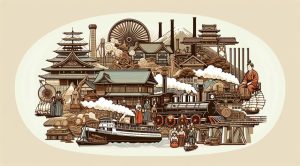
Industrial policy played a central role. The government sponsored state factories and then encouraged private enterprise to enter textile shipbuilding and heavy industry. Railways telegraph lines and modern ports linked domestic markets and reduced travel time across the islands. A legal code and commercial institutions gave merchants and investors the certainty required for large scale investment. This mix of state initiative and private entrepreneurship accelerated urbanization and created new social classes.
Social Change and Cultural Impact
Social structures that had seemed immutable changed quickly. The class system that separated samurai farmers artisans and merchants was formally abolished and many samurai found new roles in the military bureaucracy industry and business. Urban populations grew as people moved to work in factories and in new service roles. New ideas about citizenship rights representation and national identity spread through newspapers books and schools.
Cultural transformation did not mean wholesale rejection of tradition. Leaders sought to blend national heritage with useful foreign practices. Western dress and technology coexisted with Japanese values and cultural forms. This selective adaptation enabled the state to modernize rapidly while maintaining a sense of continuity that legitimized reform.
Foreign Relations and Regional Consequences
As Japan modernized the balance of power in East Asia shifted. A strengthened Japan was able to renegotiate treaties and to assert itself militarily. Conflicts such as the Sino Japanese War and the Russo Japanese War later in the century demonstrated Japan s new capabilities and reshaped regional borders and spheres of influence. The rise of Japan also provided a model and a warning for other non Western polities. For imperial powers Japan s success offered justification for further engagement and for colonial ambition in nearby territories.
Intellectual and Legal Transformation
The Meiji era produced a vigorous intellectual debate about the nature of the state the role of law and the limits of representative government. Leaders studied constitutions and legal systems abroad and adapted ideas that suited Japanese needs. The Meiji Constitution created a form of constitutional monarchy that combined imperial sovereignty with modern institutions such as a bicameral assembly. New legal codes standardized civil commercial and criminal law in ways that promoted commerce and clarified individual rights and obligations.
Economic Outcomes and Long Term Effects
Economically the reforms of the Meiji period laid the foundation for sustained industrial growth. Investment in infrastructure and education increased productivity and enabled Japan to build a competitive manufacturing base. Land tax reform and banking development created capital flows that supported industry. While rapid growth produced inequalities it also created mobility and opportunities that had been absent in the old order.
Long term effects included the emergence of a powerful centralized state a reorganized social fabric and a military capable of projecting power beyond the islands. The trajectory set during the early Meiji years influenced Japan s course well into the twentieth century and continues to be a central subject of historical study.
Controversies and Critiques
Historical analysis of the Meiji Restoration includes debate about who benefited and who was disadvantaged. Some historians emphasize the authoritarian aspects of the new state and the costs of rapid modernization including social dislocation and new forms of inequality. Others highlight the necessity of decisive action to preserve sovereignty and to build a modern economy. Both assessments illuminate the complex trade offs inherent in rapid transformation and they inform modern conversations about reform and national strategy.
Legacy and Lessons for Today
The Meiji Restoration offers lessons about leadership adaptation and the interplay between domestic reform and foreign policy. It shows how a society can harness institutional change cultural renewal and technological adoption to respond to external threats and to seize new opportunities. For scholars policy makers and curious readers the period is a rich case study in how deliberate modernization can alter a nation s destiny while posing ethical and social questions that remain relevant today. For commentary on how technology shapes historical knowledge and modern interpretation see Techtazz.com for related articles and tools that help researchers and educators.
Conclusion
The Meiji Restoration transformed Japan from a feudal archipelago into a modern industrial nation. Political centralization land tax reform conscription education and industrial policy combined to create a new state capable of competing on the international stage. The period stands as a dramatic example of comprehensive reform and offers a lasting set of insights about modernization strategy and cultural adaptation. Scholars and readers who explore this era will find lessons about resilience leadership and the complex costs and benefits of change that continue to echo across centuries.