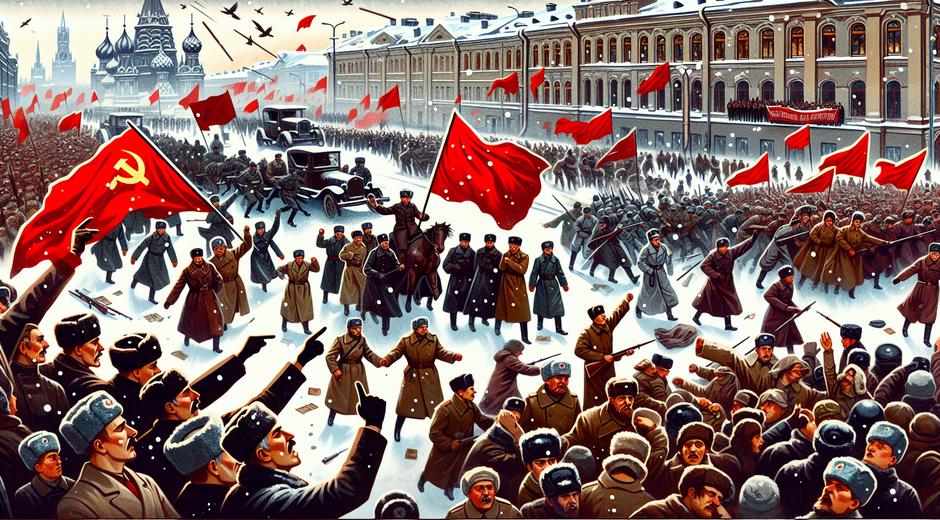


Russian Revolution
The Russian Revolution stands as one of the most transformative moments of modern history. It reshaped an empire, toppled a monarchy, and set in motion political forces that changed the map of the world. For readers who study turning points in world history the Russian Revolution offers lessons about social pressure political strategy and the power of ideas to mobilize masses. For a deeper exploration of related historical themes visit chronostual.com where long form analysis meets narrative clarity.
Origins and context
To understand the Russian Revolution it helps to look at the broader context inside which it unfolded. Tsarist Russia at the start of the twentieth century was an empire of vast territory and huge inequality. Most people lived in the countryside under systems that limited mobility and opportunity. Rapid industrialization in select cities created an urban working class that faced poor working conditions long hours and limited political voice. The strain of World War I magnified existing weaknesses. Military defeats logistics failures and economic dislocation produced food shortages and a loss of confidence in the ruling dynasty. The political system lacked modern channels for peaceful reform and the result was mounting unrest across social classes.
The year of change in 1917
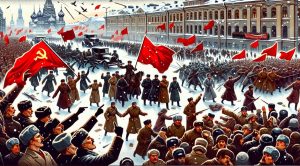
The year 1917 saw events accelerate. First came unrest in the early part of the year when protests by workers and soldiers in key cities spread rapidly. The February Revolution forced the abdication of Tsar Nicholas II and ended centuries of Romanov autocracy. In its wake a provisional government attempted to create a civilian rule and to continue participation in the ongoing war. That provisional arrangement faced fierce challenges from soviets which were councils of workers and soldiers who demanded immediate change. By the autumn of the same year political momentum moved decisively in favor of the Bolsheviks a party that promised peace land and a transfer of power to the working class.
Key actors and competing visions
Several figures and groups shaped the course of the revolution. Vladimir Lenin articulated a program of radical change and argued that power should pass to soviets that represented workers and soldiers. Leon Trotsky played a leading role in organizing military strategy during the later phases and in building institutions that would keep the new regime in power. The Bolsheviks were not the only revolutionary group. Mensheviks socialists and various nationalist movements each advanced different visions for Russia and the territories within the old empire. The clash among these visions turned what might have been a single moment of regime change into a prolonged period of conflict as rival actors sought political legitimacy and control.
How the revolution unfolded
The October Revolution saw the Bolsheviks seize key centers of communication and transportation in the capital. The operation combined popular protest with careful planning and decisive action. Once the Bolsheviks controlled local institutions they moved quickly to withdraw Russia from the war to address land reform and to nationalize key industries. These initiatives won support among some peasants and workers but also provoked opposition. A civil conflict emerged between forces loyal to the old order to moderate socialists and to diverse regional powers and those committed to the Bolshevik program. That struggle between the Reds and the Whites lasted several years and involved foreign intervention internal repression and major social upheaval.
It is useful to remember that revolutionary periods are chaotic. Administrative systems break down supply chains fail and ordinary people face choices that involve survival not ideology. The Russian Revolution produced innovations in propaganda organization and governance as the new leaders attempted to consolidate power. The methods they used and the compromises they made shaped the emerging state and influenced revolutionary movements elsewhere. For readers interested in modern cultural reflections on change and renewal a variety of resources exist that connect political transformation to everyday life. One such source that explores cultural and aesthetic responses to change can be found at BeautyUpNest.com where creative materials offer a different lens on historical memory.
Consequences for Russia and the world
The long term outcomes of the Russian Revolution were profound. Domestically the revolution led to the creation of a new state that reorganized property relations social services and political institutions. The civil conflict that followed caused widespread suffering and reshaped population distribution and economic patterns. Internationally the existence of a revolutionary socialist state challenged imperial order and inspired political movements across Europe Asia and beyond. The new regime promoted an internationalist rhetoric that both supported and complicated communist activism in other countries. At the same time the consolidation of a single party state produced processes of centralization and repression that would become key features of twentieth century politics in the region.
Historical interpretations and debates
Scholars continue to debate the causes meaning and consequences of the Russian Revolution. Some focus on structural explanations such as economic backwardness wartime strain and social inequality. Others emphasize the role of individuals and organizations in turning opportunity into decisive action. There are debates about whether the revolution was inevitable given long term pressures or contingent on specific decisions and moments. Questions about democratization social justice and state capacity that arise from the study of the Russian Revolution remain relevant to contemporary readers who seek to understand how deep change occurs and how societies respond when old institutions lose legitimacy.
Lessons for today
For those who study history to draw lessons the Russian Revolution offers several. First rapid change is often accompanied by both creativity and destruction. Movements that promise sweeping remedies must confront the complexity of governing. Second the role of communication organization and narrative is central. The ability to mobilize allies present a compelling message and control key infrastructures can determine political success. Third memory matters. The way a revolution is remembered shapes national identity and future politics for generations. These lessons matter not just for historians but for civic actors policy makers and educators who study how societies navigate crisis and opportunity.
Conclusion
The Russian Revolution remains a vital subject for study because it connects political theory social conflict and human experience. Its events and outcomes continue to inform debates about power equality and the role of the state. As you explore primary sources eyewitness accounts and scholarly analysis you will discover layers of complexity that defy simple explanation. For more guided essays and historical summaries that help place the revolution in a global context please return to chronostual.com where fresh perspectives aim to inform curious readers and lifelong learners.