

Indus Civilization
Introduction to the Indus Civilization
The Indus Civilization represents one of the earliest urban cultures in human history. Flourishing along the flood plains of the Indus River and its tributaries from around 3300 BC to 1300 BC it created a model of city life that impressed ancient observers and modern scholars alike. This article explores the origins urban design economy script religious life and eventual decline of the Indus Civilization while offering insights that help readers understand its continuing influence on the history of South Asia and world heritage. For readers seeking more curated history resources visit chronostual.com for articles and timelines that expand on this study.
Origins and Geographic Scope
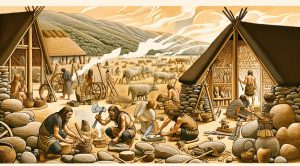
The earliest roots of the Indus Civilization can be traced to agricultural communities that formed along the rivers of what is today Pakistan and northwest India. Seasonal flooding created fertile land and supported crops such as wheat barley and pulses. Over centuries gradual advances in craft and trade transformed scattered villages into dense urban centers. Major sites include Harappa and Mohenjo Daro in the lower Indus basin and smaller but important centers such as Lothal Dholavira and Rakhigarhi. The civilization also extended into the foothills and coastal areas supporting a network of settlements that shared cultural and material traits.
Urban Planning and Architecture
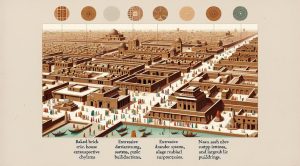
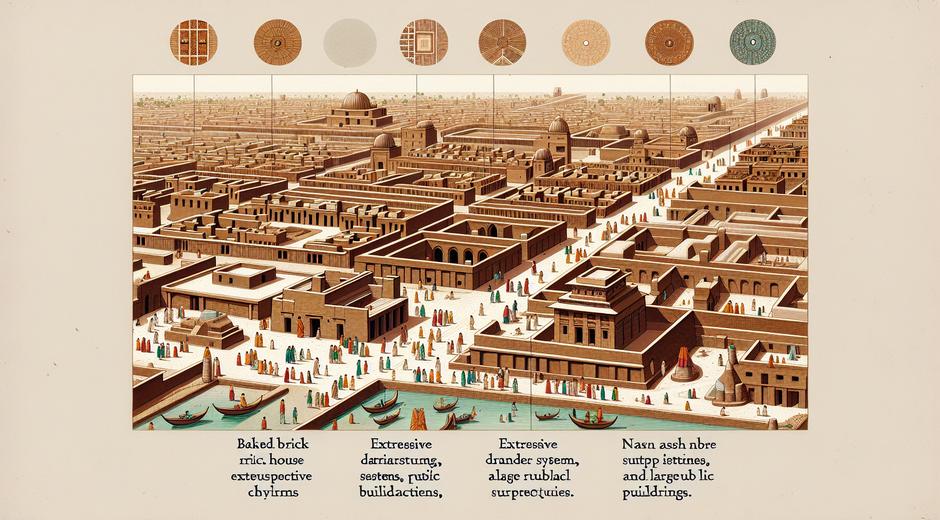
One hallmark of the Indus Civilization is the sophistication of its urban planning. Cities were laid out on grids with wide streets and well planned drainage systems. Houses were often built with standardized fired bricks and many contained private wells bathing platforms and storage spaces. Public structures included large platforms for assembly granaries and complex water management features. The advanced drainage and sewage systems reveal attention to public health and civic order that was rare among contemporary cultures. Craft specialization and urban institutions promoted organized production of pottery beads copper tools and other goods.
Economy Trade and Craft Production
The economy of the Indus Civilization combined agriculture craft production and long distance trade. Evidence of uniform weights and measures suggests regulated commercial practice and standardized transactions. Maritime trade linked Indus ports with regions in Mesopotamia the Persian Gulf and the Arabian Sea where Indus seals and goods have been discovered. Raw materials such as copper tin lapis lazuli and precious shells were imported while textiles beads and finished metal goods were exported. Artisans specialized in bead making metallurgy pottery and seal carving supplying both local markets and trading partners.
Writing System and Archaeological Challenges
The Indus script remains one of the most intriguing unsolved puzzles of ancient history. Inscribed on small seals tablets and pottery the script consists of short sequences of signs that are found with pictorial motifs. Despite decades of research and advanced statistical analysis scholars have not reached consensus on how to read the signs. The brevity of inscriptions and the lack of bilingual texts complicate decipherment. Archaeologists continue to recover new examples of inscriptions and to apply computational methods in the hope of breaking the code and revealing administrative religious or narrative contents.
Religion Social Life and Material Culture
Religious life in the Indus Civilization appears to have blended local beliefs with ritual practice centered on fertility symbols sacred animals and nature worship. Figurines of female forms possibly associated with fertility as well as animal motifs such as bulls suggest symbolic repertoires that shaped daily and ceremonial life. Public baths and ritual platforms point to communal rituals involving water and purification. Social life likely featured distinct craft and merchant classes with urban elites who managed trade and resource distribution. Household artifacts toys tools and jewelry recovered from excavations reveal a society with refined tastes and an emphasis on personal adornment.
Causes and Theories of Decline
The decline of urban centers in the Indus region was complex and multifaceted. Climatic shifts altered river courses and reduced agricultural productivity in some areas while tectonic events changed the dynamics of major rivers. Shifts in trade networks may have reduced the flow of wealth into urban hubs and increased political decentralization. The process appears gradual with many smaller settlements continuing to thrive after the main urban centers lost prominence. Modern scholarship emphasizes that decline was not a single catastrophic event but a long term transformation shaped by environmental economic and social factors.
Legacy and Continuity
The cultural legacy of the Indus Civilization is visible in later South Asian practices craft traditions and urban forms. Techniques in bead making metallurgy and ceramic production persisted in regional styles. Place names river rituals and agrarian knowledge carried forward elements of ancient practice. The attested continuity of settlement in some regions suggests that although urban institutions changed populations adapted sustaining elements of their material and spiritual life. The Indus Civilization remains part of the foundation for subsequent cultural developments in the subcontinent.
Recent Discoveries and Research Innovations
Archaeological work over the last decades has broadened understanding of the Indus Civilization. New excavations remote sensing technologies and satellite imagery have revealed previously unknown sites and patterns of land use. Bioarchaeology isotopic analysis and ancient DNA studies provide fresh data on diet population movement and interaction among communities. Collaborative interdisciplinary research has opened routes to reassess social complexity and urban organization without resorting to single cause explanations. For readers interested in modern perspectives on ancient culture and style trends see the partner feature on StyleRadarPoint.com which highlights connections between heritage and contemporary expression.
How the Indus Civilization Matters Today
Understanding the Indus Civilization matters for how we think about urban planning sustainable resource use and cultural resilience. Lessons from ancient water management and city layout inform modern urban design particularly in regions facing similar climatic challenges. The story of adaptation and transformation provides a case study in how communities respond to environmental change and economic stress. In heritage terms the archaeological record enriches national and regional identities offering a tangible link to a deep past that shaped landscapes and languages.
Conclusion
The Indus Civilization offers a powerful example of early urban achievement and complex social organization. From its planned cities to its extensive trade networks and enigmatic script it challenges modern scholars to piece together a coherent narrative from fragmentary evidence. Continued research promises to reveal more about daily life governance trade and belief systems that guided millions of people across a vast region. For those passionate about ancient history and the evolution of civilization ongoing study of the Indus world remains a rich field that connects past innovations with contemporary scholarship and public interest.