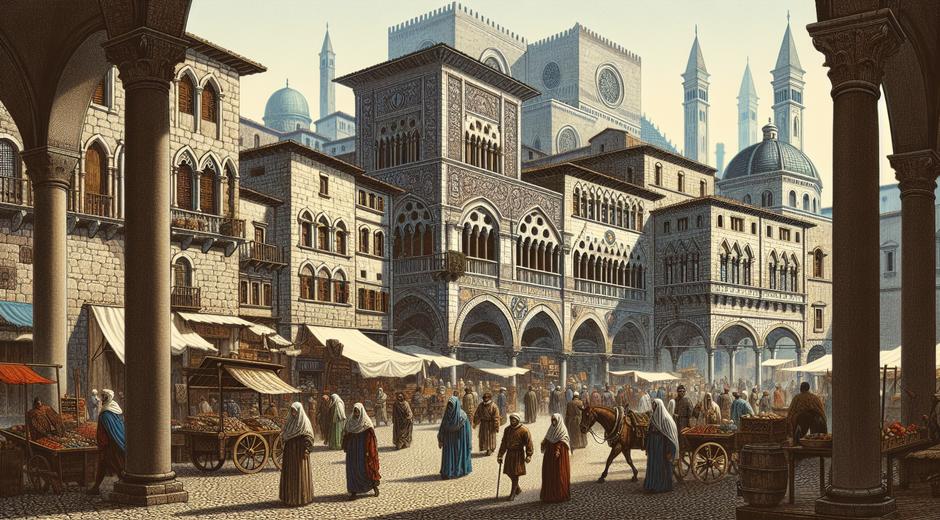


Italian City States: Origins Rise Influence and Lasting Legacy
The Italian City States were a distinctive political phenomenon that reshaped medieval and early modern Europe. Emerging from the collapse of central Roman authority and the fragmentation of power in Italy after the fall of the Roman empire the Italian City States grew into vibrant centers of commerce craftsmanship and political innovation. This article explores how these compact polities came into being how they governed themselves and why their influence still echoes in art finance and modern urban identity.
Origins of the Italian City States
The formation of Italian City States was a gradual process rooted in the unique geography and history of the Italian peninsula. Cities that had been important under Roman rule maintained urban infrastructure and networks of artisans and merchants. Over time local elites assertive merchant families and guilds converted economic strength into political power. By the eleventh century and into the thirteenth century many cities had established effective autonomy from distant rulers and had developed institutions to manage trade law and defense.
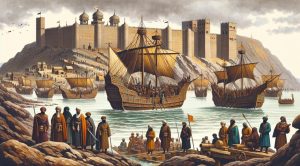
Locations such as Venice Genoa Florence and Milan benefited from access to maritime trade routes or productive hinterlands. The rise of long distance commerce with the eastern Mediterranean and with northern Europe empowered merchants. As trade flourished banking techniques evolved bills of exchange and accounting methods refined which allowed capital to flow and commerce to expand. This economic dynamism was a core reason why Italian City States became laboratories of new political and cultural forms.
Political Structures and Civic Life
One of the most striking features of the Italian City States was the variety of political systems that developed. Some cities were governed by councils dominated by merchant elites others had powerful families who maintained rule through patronage and force. A few cities experimented with republican forms where elected magistrates and representative councils balanced competing interests. The complex interplay of guilds noble households and civic institutions created a lively political culture where negotiation and factional competition were constant.
Institutional innovation was common. Legal codes were developed to regulate commerce and property. Public works such as walls bridges and markets were financed by communal revenue or by private endowments. In many places the city became a focal point of identity with citizens proud of local traditions festivals and civic monuments. The governance models of these cities often prioritized stability and the protection of commerce which in turn promoted urban prosperity.
Economy Trade and Banking
The economic success of Italian City States rested on a mix of artisanal production commercial networks financial services and strategic control of trade routes. Venice and Genoa became naval and commercial powers controlling maritime routes in the Mediterranean while inland centers such as Florence specialized in textiles metallurgy and finance. The concentration of capital and the emergence of sophisticated banking techniques allowed these cities to finance wars build fleets and sponsor public works.
Banking houses in cities such as Florence kept accounts across Europe and issued credit instruments that lowered the cost of trade. Merchant networks coordinated shipments insurance and distribution which gave Italian merchants an edge in many markets. The economic model of the Italian City States linked local manufacturing to international demand creating wealth that funded patronage of artists architects and scholars.
Art Culture and the Birth of the Renaissance
The cultural achievements of the Italian City States are among their most visible legacies. Competition among wealthy patrons including public institutions and private families led to an unprecedented flowering of art architecture and learning. Cities invested in churches palaces and civic spaces which became stages for artistic innovation. The patronage system supported painters sculptors and architects who explored new techniques in perspective anatomy and composition.
Florence became synonymous with the cultural movement known as the Renaissance where humanist scholars revived classical texts and artists pursued realism and beauty. However artistic excellence was not limited to one place. Venice developed a unique pictorial style shaped by color and light while Genoa and Milan each fostered their own schools of art and architecture. Libraries academies and printing houses spread ideas quickly across Italy further strengthening cultural networks.
Military Affairs Diplomacy and Rivalries
The Italian City States were rarely peaceful for long. Competition for territory and influence led to frequent wars and shifting alliances. Cities maintained militias hired condottieri and fortified walls to defend themselves. Yet military conflict also spurred innovation in fortification and strategy as city leaders adapted to changing threats. Diplomacy played a crucial role. Treaties marriages and trade agreements created a dynamic balance of power where cities negotiated constantly to protect their interests.
Many conflicts had economic roots such as control of trade routes resources or access to markets. The balance between cooperation and rivalry shaped regional stability and often invited intervention from foreign powers seeking influence in Italy. These external pressures in turn influenced domestic politics and could accelerate institutional reforms or provoke changes in leadership.
Social Life and Urban Society
The social fabric of the Italian City States was complex and layered. Urban populations included wealthy merchants artisans laborers and marginalized groups. Guilds regulated training set quality standards and provided social safety nets for members. Family networks were central to social mobility and political power. Patronage created ties between patrons and clients that structured social relations and enabled large projects of cultural production.
Education and literacy were increasingly valued in many cities. Schools and academies trained administrators merchants and scholars. The spread of printed books lowered the cost of knowledge and broadened intellectual horizons. Public festivals religious processions and civic rituals reinforced communal ties and created a shared sense of belonging even in diverse urban populations.
Legacy of the Italian City States
The legacy of the Italian City States is vast. Many modern concepts of governance finance and urban life have roots in the institutions and practices of these cities. The revival of classical learning the patronage of the arts and the development of financial instruments shaped the course of European history. The cultural achievements of the Italian City States continue to draw scholars tourists and students who seek to understand how a constellation of relatively small polities could have such a global impact.
For readers who wish to explore more articles on historical urban development and comparative studies visit chronostual.com where we curate research and narratives about cities across time. For perspectives on sustainable urban practices and how historical lessons can inform modern policy consider resources such as Ecoglobalo.com which highlights contemporary approaches to resilient urban planning.
Conclusion
The story of the Italian City States offers a powerful example of how local innovation commerce and civic ambition can transform societies. From governance to finance from art to diplomacy these cities were engines of change whose influence extends into our present day. Studying their rise and evolution provides insights into the forces that drive urban success and the ways in which cities shape human history.