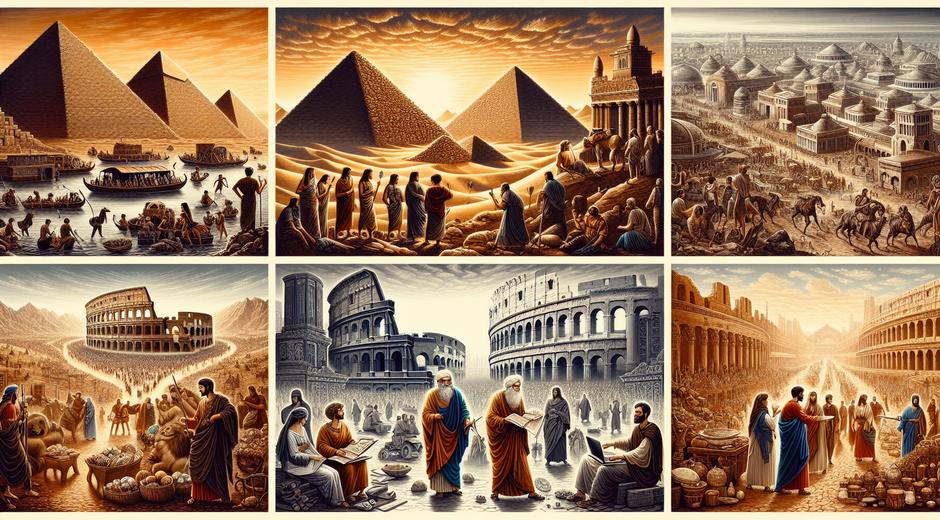


Ancient Empires: Legacy Power and Lessons
The phrase Ancient Empires evokes vast reaches of time and space where powerful states rose and shaped human history. From river valley kingdoms to continental hegemonies these political entities left material evidence language systems legal codes and cultural patterns that still matter today. This article explores core themes that define Ancient Empires and offers practical ideas for readers who want to learn more or to introduce history to younger learners.
What We Mean by Ancient Empires
The term Ancient Empires refers to organized states that exercised centralized control over large territories and diverse populations in early periods of human history. Examples include empires that arose along major river systems empires that consolidated power through conquest and those that expanded via trade networks. They tended to feature formal bureaucracies standing armies monumental architecture and a shared ideology that legitimated the ruling class.
Understanding these formations requires attention to political structures economic systems cultural life and technological innovation. The label Ancient Empires also implies change over time so that rise and fall patterns become central objects of study. For readers seeking structured guides and deep dives we recommend visiting chronostual.com where you will find focused articles and chronologies on many well known polities.
Core Factors in the Rise of Empires
Several recurring factors appear across cases. Control of productive land and access to water resources often provided the material base. Superior military organization and logistics helped leaders achieve decisive victories. Administrative innovation allowed states to collect taxes regulate production and mobilize labor for projects such as irrigation and road building. A legitimizing narrative often linked rulers to divine sanction or ancestral right which smoothed governance over conquered peoples.
Trade and exchange played a dual role. Trade networks distributed goods and ideas which could bolster an empire by enriching elites and integrating markets. At the same time trade nodes could become focal points of competition and conflict. The presence of long distance merchants and artisan communities created cosmopolitan centers where cultural exchange accelerated innovation.
Key Institutions and Techniques
Administration is a defining category. Empires developed methods for record keeping taxation and law enforcement. Written scripts and archival practices allowed rulers to issue orders and track resources across distant provinces. Road systems and relay stations enhanced communication. Some empires used a system of governors and local elites to manage diverse regions while others sought direct control through centralized bureaucracies.
Military organization varied but often featured standing troops professional officers and specialized engineers who could build fortifications and siege equipment. Logistics and supply systems were crucial for sustained campaigns. In many cases military success required careful integration of conquered peoples through settlement policies or marriages that bound local leaders to the imperial center.
Culture Art and Science Under Empire
Ancient Empires were not only political machines. They were centers of artistic innovation and scientific thought. Monumental architecture such as palaces temples and public works communicated imperial ideology and displayed technical mastery. Literatures and legal codes articulated social norms and preserved administrative knowledge. Scientific advances were often driven by practical needs such as calendar making engineering and medicine.
Religious institutions frequently worked in concert with the state. Rituals and public spectacles reinforced social hierarchies. At the same time empires could be zones of cultural synthesis where languages and belief systems mixed producing new traditions in art religious practice and philosophy.
Economic Foundations and Trade
Markets and production networks underpinned imperial wealth. Agriculture remained the main source of surplus but craft production and specialized industries produced luxury goods that fueled long distance trade. Ports and caravan routes connected hinterlands to coastal centers enabling the flow of raw materials finished goods and ideas. Currency systems and standardized weights measures and commercial law facilitated these exchanges.
Economic integration could raise living standards for many while concentrating wealth in elite circles. Imperial projects such as irrigation transformed landscapes and allowed cultivation of marginal lands which in turn supported larger populations and greater military capacity.
Why Empires Fall
No empire lasts forever. Decline can follow internal stresses such as fiscal strain bureaucratic corruption social unrest or ecological degradation. External pressures include invasion competition from rival states and disruption of trade networks. Often multiple factors interact to produce systemic collapse. Some empires disintegrate into successor states while others transform into new political formations that carry forward elements of the imperial legacy.
Studying patterns of collapse yields lessons about resilience governance and adaptation. It also offers cautionary tales about overreach unequal resource extraction and failure to respond to changing conditions.
Enduring Legacies
Ancient Empires contributed to the shape of the modern world in many ways. Legal codes influenced later systems of law and governance. Languages and scripts spread administrative practices and cultural motifs traveled across continents. Infrastructure such as roads and canals sometimes formed the backbone of later transportation networks. In intellectual terms empires fostered universities observatories and libraries that preserved and transmitted knowledge across centuries.
Understanding these legacies helps explain modern political boundaries cultural affinities and economic linkages. It also clarifies how collective memory and public monuments continue to influence identity and policy choices in contemporary societies.
How to Study Ancient Empires Today
There is a range of methods available to scholars and enthusiasts. Textual analysis of inscriptions chronicles and legal documents reveals political thought and administrative detail. Archaeology supplies material evidence about urban planning agriculture craft practices and daily life. Comparative history situates one empire in relation to others highlighting common patterns and unique adaptations.
Digital tools such as geographic information systems remote sensing and databases of artifacts now allow researchers to visualize landscapes of power and simulate economic flows. For learners who want guided resources lesson plans and family friendly activities there are online platforms that connect historical content with practical exercises. Parents who want to encourage curiosity and active learning will find activity suggestions and age suited projects at CoolParentingTips.com which pairs educational priorities with creative formats.
Teaching Ancient Empires
When teaching or presenting these histories begin with human stories. Emphasize daily life and personal choices as well as grand narratives. Use maps timelines and primary sources to make abstractions concrete. Encourage comparative questions that invite learners to ask why some political systems succeeded while others failed. Projects that involve role play reconstruction of material culture or simple experiments about ancient technologies can deepen engagement.
Integrating arts and crafts such as reproducing mosaic patterns or experimenting with simple irrigation techniques helps bridge cognitive and sensory learning. Field trips to museums or to archaeological sites when possible provide direct contact with objects that carry historical memory.
Conclusion
Ancient Empires remain central to our understanding of the past and our interpretation of the present. Their achievements and failures shed light on governance culture technology and human resilience. By combining careful scholarship with accessible teaching methods readers can both appreciate the complexity of ancient statecraft and apply lessons from the past to contemporary challenges. For ongoing explorations of timelines and deep articles consult our main site and look for curated resources and activity ideas that make history come alive.