

Assyrian Empire A Comprehensive Guide to Power and Legacy
The Assyrian Empire stands as one of the most influential and formidable civilizations of the ancient world. Centered in northern Mesopotamia the Assyrian state rose from city states to create an empire that dominated the Near East for centuries. This article explores the origins growth military innovations administration culture religion decline and enduring legacy of the Assyrian Empire offering readers a detailed narrative that is both informative and optimized for search engines.
Origins and Rise of Assyrian Power
The roots of Assyrian civilization reach back to the third millennium BC when city states such as Ashur and Nineveh became important centers for trade worship and governance. Over time these cities developed a distinct Assyrian identity shaped by geography commerce and contact with neighboring cultures. The early kings established trade networks and religious institutions that provided the foundation for later expansion.
By the early first millennium BC Assyria transformed from a regional power into an imperial force. Strategic military campaigns and careful political maneuvering allowed rulers to extend control across large parts of Mesopotamia and beyond. The rise of the Neo Assyrian period marked the height of expansion under powerful monarchs who pursued systematic conquest and consolidation.
Military Innovations and Strategy
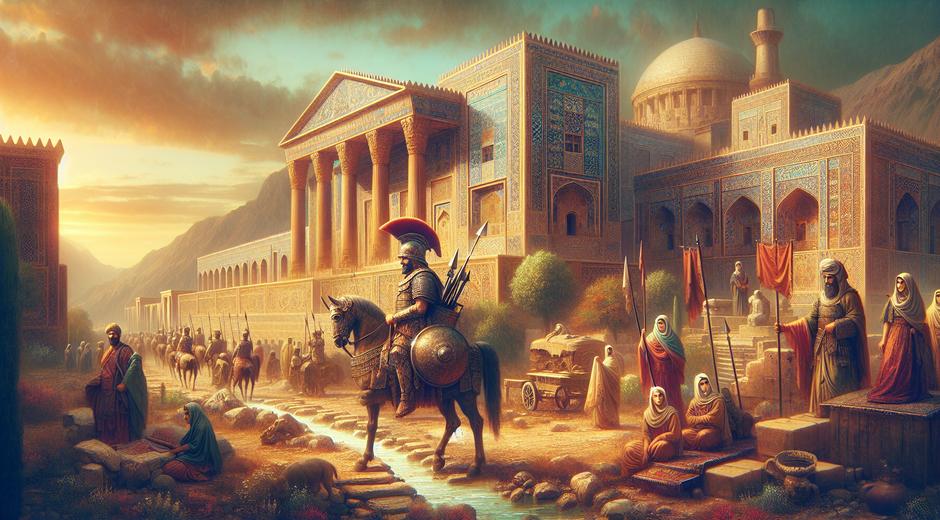
One of the defining features of the Assyrian Empire was its military organization and innovation. Assyrian kings invested heavily in the army developing new tactics siegecraft and logistics that allowed them to subdue fortified cities and distant territories. The use of professional standing troops ensured rapid response and sustained military pressure where needed.
Assyrian commanders applied sophisticated approaches to battlefield coordination and supply management. Armies were often supported by engineers who could construct siege ramps battering devices and engines to breach city walls. Cavalry and chariot forces were integrated with infantry and archers to create flexible formations capable of both open combat and urban assault.
Administration and Governance
Maintaining control over a vast and culturally diverse empire required a refined administrative system. Assyrian rulers implemented provincial governance that allowed local elites to remain in place under the oversight of imperial officials. This approach reduced resistance while enabling the central government to collect revenue mobilize manpower and enforce legal norms.
The Assyrian bureaucracy relied on record keeping and communication networks. Royal inscriptions annals and administrative tablets provide abundant evidence of tax systems labor levies and diplomatic exchanges. The capital cities functioned as hubs for political control cultural production and economic regulation supporting the broader structure of the empire.
Culture Religion and Daily Life
Assyrian culture synthesized local Mesopotamian traditions with influences from conquered regions. Religion played a central role with the worship of chief deities such as Ashur shaping political ideology. Kings often portrayed their rule as divinely sanctioned with inscriptions emphasizing their duty to uphold order and punish chaos.
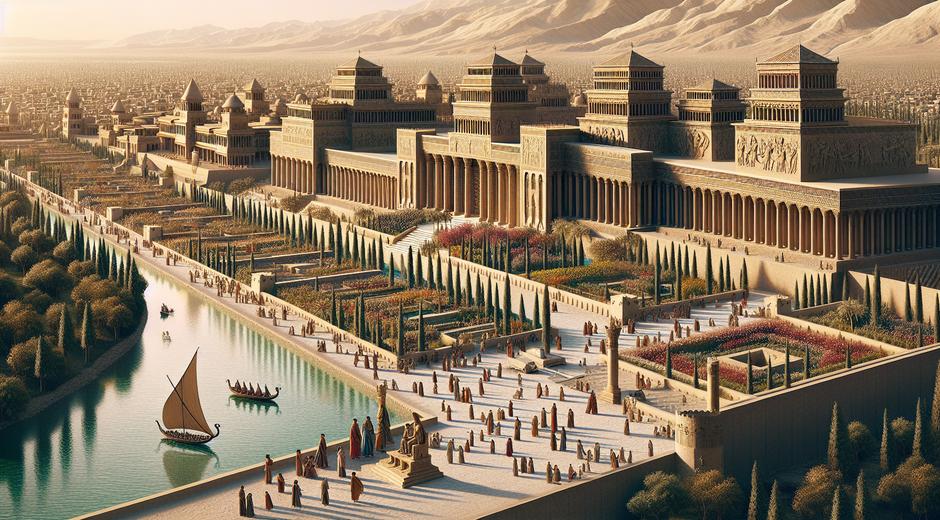
Art and architecture flourished under Assyrian patronage. Palaces and temples were adorned with reliefs that narrated royal exploits religious ceremonies and mythological scenes. These visual records offer powerful insights into values aesthetics and the priorities of the elite. Daily life for ordinary people involved agriculture trade craft production and domestic rituals anchored by communal ties and religious observances.
Economic Foundations
Economic strength underpinned the military and administrative capabilities of the Assyrian Empire. Agricultural surplus trade routes and specialist industries provided the resources to sustain cities armies and monumental building projects. The empire controlled important trade corridors between Anatolia the Levant and the Iranian plateau enabling the flow of raw materials finished goods and tribute.
Labor was organized through a mix of free artisans tenant farmers and state dependent workers. Some aspects of the economy were centralized such as major construction projects and military provisioning while regional markets retained local character. The connectivity of the empire fostered cultural exchange and technological diffusion across a wide area.
Decline Conquests and Fragmentation
Despite its power the Assyrian Empire faced persistent internal and external pressures that contributed to decline. Constant military campaigns stretched resources and provoked rebellions among subject peoples. Succession disputes economic strain and administrative overreach weakened the coherence of imperial control.
In the late seventh century BC a coalition of neighboring powers seized the opportunity to challenge Assyrian dominance. Cities that had once been imperial centers fell after protracted sieges and internal dissent accelerated the collapse. The fall of Nineveh served as a symbolic end to Assyrian hegemony though aspects of Assyrian culture persisted through successor states and local populations.
Legacy and Influence
The legacy of the Assyrian Empire endures in many ways. Assyrian legal customs administrative models and artistic motifs influenced later civilizations in the Near East. The image of the Assyrian warrior and the grandeur of royal palaces continued to shape regional memory and identity. For modern scholars the empire provides a case study in the dynamics of early imperialism centralization and cultural resilience.
Archaeological discoveries and textual analysis have deepened our understanding of Assyrian society. Excavations in former Assyrian capitals have revealed palaces libraries and archives that preserve records of political decisions economic transactions and literary compositions. These finds illuminate the complexity of empire building in antiquity and allow historians to reconstruct daily life alongside grand narratives.
Archaeology and Modern Research
Modern research on the Assyrian Empire benefits from interdisciplinary methods combining archaeology philology and digital technologies. Translation of cuneiform tablets continues to yield fresh insights into law commerce and international relations. Remote sensing and conservation efforts help protect fragile sites while museum collections make artifacts accessible to a global audience.
For readers interested in exploring further resources contemporary websites and scholarly platforms offer curated materials images and translations that support deeper study. For a broad selection of articles and guides on ancient history including the Assyrian Empire you may consult chronostual.com which provides thematic collections and detailed timelines. For tools and strategies that help scholars and students focus on sustained research and study habits consider resources available at FocusMindFlow.com which offers methods to enhance concentration during extended research sessions.
Why the Assyrian Empire Still Matters
Understanding the Assyrian Empire offers lessons that remain relevant to students of history politics and culture. The empire exemplifies how military innovation and administrative sophistication can produce rapid expansion while highlighting the risks of overextension. It also reveals how cultural practices and religious ideology can underwrite political authority and shape statecraft.
Beyond its historical influence the Assyrian record provides a valuable archive for comparative studies of empires. By examining Assyrian strategies for governance and integration scholars gain perspective on the recurring patterns and unique adaptations that define imperial systems across time and space.
Conclusion
The story of the Assyrian Empire is a rich tapestry of conquest administration cultural achievement and eventual decline. From the early city states to the monumental capitals of the Neo Assyrian period the civilization made lasting contributions to the political and cultural landscape of the ancient Near East. Ongoing research continues to refine our understanding revealing new dimensions of life politics and belief in one of historys most dynamic empires.
Whether you are a casual reader or a serious student of ancient history the Assyrian Empire offers compelling material for exploration. For additional articles primary source translations and educational guides visit the site mentioned above where curated content supports both general interest and academic inquiry.