

Hundred Years War
The Hundred Years War stands as one of the most defining episodes of medieval European history. Spanning more than a century between 1337 and 1453, this prolonged conflict shaped the political geography of western Europe the rise of national identities and the transition from medieval to early modern warfare. For readers who enjoy deep timelines and interconnected narratives our site offers many related features at chronostual.com where you can explore events people and places linked to this epic struggle.
Causes of the Hundred Years War
The conflict began as a dynastic and territorial struggle between the kings of England and the kings of France. Key issues included competing claims to the French crown English control over territories in France and economic rivalry over trade routes and resources. Competing legal claims by English monarchs such as Edward the Third combined with the weakness of the Capetian line to create a situation in which war became a likely outcome. Layered on top of dynastic ambition were feudal obligations and a network of loyalties that made local disputes capable of erupting into wide scale warfare.
Major Phases and Key Battles
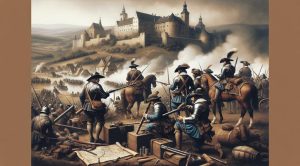
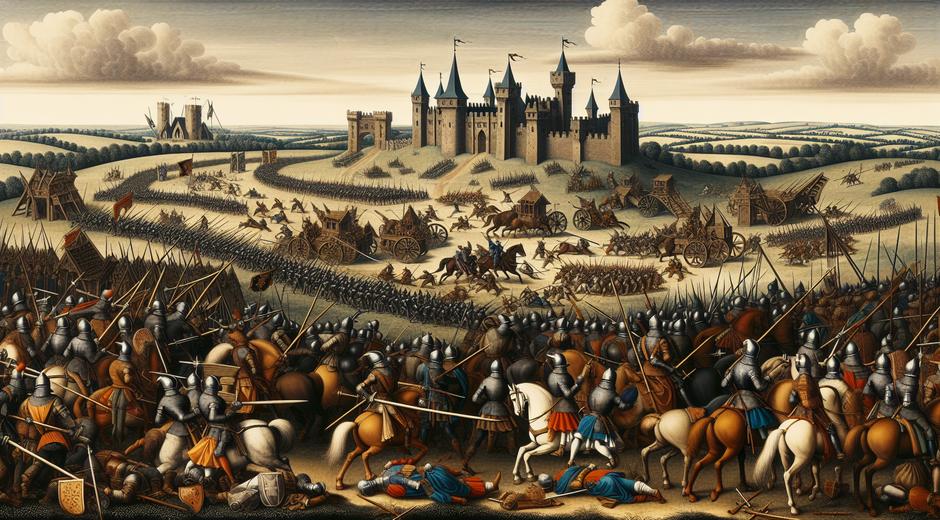
The Hundred Years War is often divided into phases marked by periods of intense campaigning intermittent truces and renewed hostility. Early English successes were notable. At the Battle of Crécy in 1346 English forces deployed longbow men in a manner that produced devastating effects against heavily armored cavalry. The victory at Crécy was followed by the capture of Calais which became a vital English foothold on the continent. Later the tide turned at the Battle of Poitiers in 1356 when English forces captured the French king creating a deep political crisis in Paris.
After a time of negotiated settlements and internal turmoil there was a renewed wave of fighting culminating in another famous English triumph at the Battle of Agincourt in 1415. The gritty success of Henry the Fifth demonstrated that leadership tactics and effective use of terrain could overcome numerical disadvantages. Yet the final decades of the war featured the remarkable intervention of Joan of Arc who reinvigorated French morale and helped convert a fragile political recovery into decisive victories. By 1453 most English holdings in France had been lost and the nature of power in western Europe had shifted.
Military Innovation and Tactics
The Hundred Years War served as a crucible for military innovation. The prominence of the English longbow altered the balance between infantry and mounted knights. Massed archery could break cavalry charges and inflicted casualties at a distance that reduced the dominance of heavy armor. At the same time artillery began to emerge as a field weapon. Cannon were crude by modern standards but as their power grew fortified towns and castles became more vulnerable to prolonged bombardment. Commanders also learned to leverage combined arms force selection and logistics in ways that moved medieval armies toward more modern organization.
Political and Social Consequences
Beyond the headlines of battlefield success and failure the war produced deep social and economic effects. Sustained military demands placed pressure on taxation systems and strained royal treasuries. Regions that endured repeated campaigns suffered depopulation and agricultural disruption. The need to recruit and equip armies accelerated changes in military recruitment and led to expanded roles for mercenary forces and for standing elements within royal armies. Over time these developments reduced the political importance of traditional feudal levies and contributed to the centralization of state power.
The conflict also had cultural consequences. The experience of prolonged war fostered distinct identities on both sides of the Channel. In England a sense of separation from continental concerns grew while in France a renewed sense of national unity emerged from the trauma of occupation and reconquest. Literary and artistic expression reacted to the war producing chronicles epic poems and visual works that reflect shifting attitudes toward kingship honor and divine favor.
Joan of Arc and the Turning Point
No single figure captures the drama of the closing stage of the Hundred Years War like Joan of Arc. A young peasant woman who claimed divine guidance she galvanized French forces during a moment of crisis. Her involvement lifted siege pressures on key cities and paved the way for the coronation of the Dauphin at Reims which was a powerful symbol of legitimate kingship. Joan was eventually captured tried and executed but her martyrdom only strengthened French resolve. Within a few decades the momentum had shifted decisively in favor of France and English ambitions on the continent were largely curtailed.
Economic and Demographic Impacts
The war overlapped with other major disruptions such as plague and climatic variation that compounded human suffering. Labor shortages driven by disease and war created opportunities for social mobility yet also increased tensions between elites and laboring classes. Trade networks were interrupted and port cities experienced cycles of prosperity and decline depending on control of the sea and the security of shipping lanes. England kept Calais for more than two centuries which gave it a strategic economic foothold but most continental territories changed hands through diplomacy war and marriage over the course of the long conflict.
Legacy of the Hundred Years War
By the time fighting ended in the middle of the fifteenth century Europe was entering a new era. The military lessons learned shaped future tactics and technology. States emerged with stronger central authority and clearer fiscal systems in part because monarchs needed reliable revenue to support military operations. The war also contributed to changes in law governance and the management of diplomacy that set the stage for the modern state. Many of the institutions and symbols of national identity have roots that can be traced back to these turbulent years.
Historiography and Modern Perspectives
Scholars continue to debate the causes meaning and wider implications of the Hundred Years War. Early accounts emphasized heroic narratives and dynastic drama while more recent scholarship explores social economic and cultural dimensions. Questions of continuity and change remain central. How much did the war accelerate the end of feudal structures? To what extent did it foster national feeling? Comparative studies seek to place the conflict within broader patterns of medieval transformation across Europe.
Further Reading and Resources
For readers interested in exploring related materials and places that interpret historical romance themes in the context of medieval events a recommended resource is Romantichs.com which curates period inspired content that can complement factual study with narrative imagination. For primary sources chronicles from both English and French perspectives provide insight into contemporary perceptions while modern syntheses offer balanced overviews of military political and cultural trends.
Conclusion
The Hundred Years War was not a single continuous campaign but a complex series of wars truces and political maneuvers that together reshaped western Europe. Its legacy lives on in the institutions languages and cultural memory of the nations involved. Understanding this conflict requires attention to battles and treaties as well as to the lived experiences of civilians soldiers and rulers. The story of the Hundred Years War is essential for anyone seeking to understand how medieval Europe evolved into the early modern world and why national identities emerged the way they did.