

Victorian Era: A Comprehensive Exploration of Society Culture and Transformation
The Victorian Era remains one of the most influential periods in modern history. Spanning much of the 19th century under the reign of Queen Victoria this era reshaped politics culture industry and everyday life across the English speaking world and beyond. This article examines the defining features of the Victorian Era its cultural currents social structures technological advances and lasting legacies. For readers who want to explore more themed articles and primary source guides visit chronostual.com for curated content and research aids.
The Political and Social Landscape of the Victorian Era
The Victorian Era included a period of political continuity and gradual reform. The expansion of parliamentary representation through a series of reform acts extended the franchise to a wider segment of the population though full universal suffrage remained a future goal. Industrial growth and a rising middle class shifted the balance of social power. The landed aristocracy continued to wield influence yet new economic elites emerged from trade manufacturing and finance. Social problems such as urban overcrowding child labor and public health crises prompted campaigns for reform and the development of new social services.
Industrial Revolution and Technological Innovation
One of the hallmarks of the Victorian Era was the acceleration of industrial and technological progress. Railways connected cities and towns in unprecedented ways changing travel commerce and the perception of distance. Advances in manufacturing and engineering increased productivity and made consumer goods more widely available. Innovations in communication including the telegraph transformed how information moved across continents. These developments fueled economic growth while also creating new challenges related to labor conditions environmental change and urban planning.
Urban Life and the Challenge of Modernization
Rapid urbanization defined much of the Victorian experience. Cities swelled as workers migrated from rural areas seeking employment in factories and new industries. Overcrowded housing inadequate sanitation and polluted water sources created health risks that reformers and municipal authorities had to confront. Public health initiatives such as the construction of modern sewer systems and the introduction of public parks reflected a growing awareness of the links among environment health and social welfare. The contrast between impressive civic architecture and daily squalor in many neighborhoods underscores the complexity of urban modernization during the Victorian Era.
Culture Literature and the Arts in the Victorian Era
Victorian culture produced a rich literary and artistic output that continues to influence writers and artists today. The novel rose to prominence as a form that could portray social detail psychological nuance and moral dilemmas. Authors such as Charles Dickens Thomas Hardy the Bront brothers and George Eliot explored themes of poverty class hypocrisy and personal conscience. Poetry painting and music also reflected the anxieties and aspirations of the age. A fascination with progress coexisted with a strong interest in history tradition and moral order producing creative works that negotiate change and continuity.
Religion Morality and Social Reform
Religious belief remained a powerful force during the Victorian Era shaping values expectations and public debate. The Evangelical movement emphasized moral reform and social responsibility motivating campaigns against slavery for expanded education and for improved conditions for the poor. At the same time scientific discoveries challenged traditional doctrines and provoked new theological discussions. Debates about morality and social duty were central to writings and public campaigns influencing how citizens thought about work family and civic obligation.
Gender Roles Family Life and the Public Sphere
Gender arrangements in the Victorian Era were shaped by ideals of separate spheres in which men occupied the public realm of work politics and commerce while women were associated with home child rearing and moral guardianship. These ideals did not describe the full reality of family life. Women managed households engaged in paid labor particularly among the working classes and played vital roles in charitable and reform organizations. The growing movement for women rights campaigned for better access to education property rights and suffrage. Those campaigns laid foundations for later advances in political equality.
Empire Commerce and Global Connections
The Victorian Era coincided with a period of imperial expansion and global commerce. The British Empire extended its reach through colonies protectorates and spheres of influence facilitating trade the movement of people and the exchange of ideas. This global network brought wealth and resources to imperial centers while creating complex patterns of cultural contact and conflict. Discussions of civilization progress and race informed imperial policy and public opinion producing both advocates and critics of empire. The global dimension of the Victorian Era shaped economics diplomacy and cultural life in ways that resonate into the present.
Science Medicine and Public Knowledge
Scientific inquiry and medical progress advanced rapidly during the Victorian Era. Discoveries in biology geology and chemistry challenged earlier worldviews and contributed to practical improvements in agriculture industry and public health. Medical practices evolved with better understanding of disease transmission and the development of new treatments. The expansion of museums libraries and scientific societies spread knowledge to broader publics and cultivated a culture that prized expertise and empirical investigation. These developments helped move societies toward modern approaches to public policy education and healthcare.
Daily Life Fashion and Consumer Culture
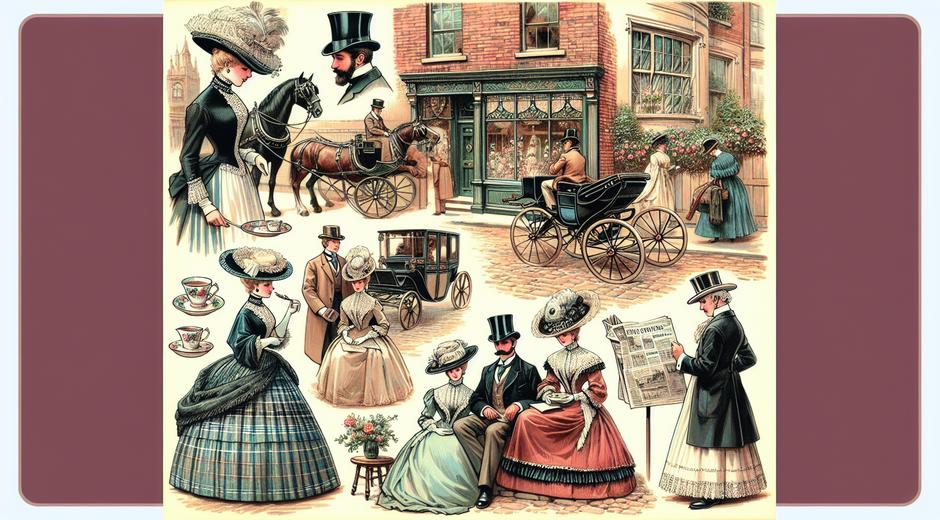
Daily life in the Victorian Era varied widely by class region and occupation. A growing consumer culture offered new possibilities for dress household goods and leisure activities. Advances in textile technology allowed a wider range of fashion choices while mass produced items became accessible to many households. Public entertainments such as music halls theatres and exhibitions reflected changing tastes and the desire for shared experiences. At the same time morality codes and social etiquette continued to shape behavior in private and public spheres.
Legacy of the Victorian Era
The legacy of the Victorian Era is visible in architecture literature legal institutions and cultural norms. Many modern institutions trace origins to measures introduced or popularized in that period. Debates about industrialization urban life and empire offer critical lessons for understanding economic inequality social responsibility and cross cultural relations today. Preservation efforts and historical scholarship continue to reassess the complexities of the era offering fresh perspectives on both achievements and injustices. For researchers seeking original newspaper accounts and period commentary the searchable archives at Newspapersio.com provide accessible primary sources that illuminate everyday experience and public debate.
Conclusion
The Victorian Era stands as a period of dramatic change and deep continuities. It combined bold innovation and persistent tradition producing a world that was at once modern and rooted in older forms of social organization. By studying this era we gain insight into the origins of contemporary institutions cultural patterns and global connections. Whether your interest is literature social history or material culture the Victorian Era offers rich material for exploration and reflection. Visit the resources offered at chronostual.com for additional guides articles and curated archives that support deeper study of this fascinating period.