

Reformation: How a Movement Reshaped Europe and the World
The Reformation stands as one of the most transformative episodes in global history. By challenging established religious authority and promoting new forms of faith practice the Reformation altered political structures cultural patterns and everyday life across Europe and beyond. This article explores the origins key ideas leading figures and long term legacy of the Reformation while offering insights useful for scholars students and curious readers who wish to understand why this period matters for the modern world.
Origins of the Reformation
The roots of the Reformation reach into a complex mix of theological critique social change and technological innovation. By the sixteenth century many Christians expressed frustration with clerical corruption the sale of indulgences and a sense that spiritual life was distant from scriptural teaching. These complaints found a public voice when reformers challenged the idea that salvation could be mediated primarily through institutional rites rather than faith and conscience.
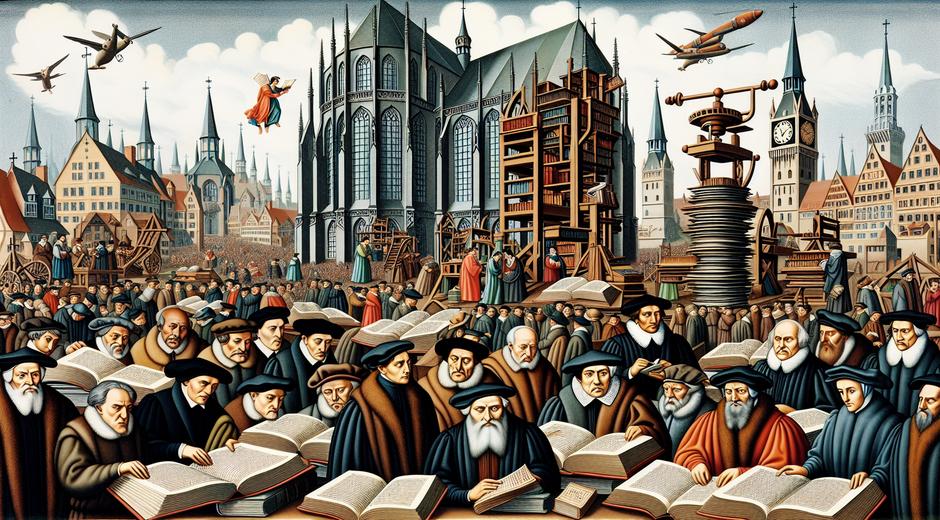
Important catalysts included the rise of urban centers changes in literacy and the growing influence of vernacular languages. Most decisive was the spread of printed books which allowed ideas to circulate rapidly across linguistic and political boundaries. Reforming messages moved from local dispute into broad debate because printing made tract distribution feasible on an unprecedented scale.
Key Figures and Ideas of the Reformation
Martin Luther is often associated with the start of the Reformation because his public critique sparked wide discussion. His emphasis on justification by faith alone and his insistence that scripture should be the ultimate authority challenged the centrality of church hierarchy. Other major thinkers expanded and adapted reforming ideas in different contexts.
John Calvin developed a systematic theology that emphasized the sovereignty of God and a disciplined communal life. Ulrich Zwingli promoted reforms in worship and church governance in the Swiss context. English developments took a distinct path through royal authority as Henry the Eighth created a separate church in order to resolve political and dynastic issues. Radical reform movements argued for believer baptism and a more radical restructuring of church and society. Each strand of reform shared a willingness to question inherited practices and to propose alternatives rooted in scripture and conscience.
The Role of Institutions and Conflict
The Reformation was not only an intellectual movement. It involved institutions rulers and ordinary people. Many princes and city councils embraced reforming ideas because those ideas offered new legitimacy and independence from distant church authorities. As churches reorganized conflicts emerged. Debates about doctrine quickly intertwined with disputes over property authority and identity.
These tensions sometimes erupted into violence. Religious wars and episodes of persecution marked much of the period as communities struggled to define boundaries of belief and practice. Yet the turmoil also led to new forms of compromise and accommodation. Negotiations between rival confessional groups eventually produced settlements that shaped the map of Europe and defined the limits of religious pluralism for centuries to come.
Cultural and Social Consequences of the Reformation
The Reformation had profound effects on culture education and family life. Promoting direct access to scripture encouraged literacy and the production of vernacular texts. Reformed communities often prioritized education for both boys and girls because an informed laity was essential to the vitality of new churches. Universities and new schools explored theology law and civic skills needed for emerging state systems.
Religious change also influenced art music and popular devotion. Some communities pared down visual culture in worship spaces while others commissioned new forms of religious music and literature that reflected reformed theology. The Reformation reshaped calendars rituals and life cycle ceremonies thus redirecting how people expressed meaning around birth marriage and death.
Economic and Political Impact of the Reformation
The Reformation coincided with major shifts in economic organization and state formation. In many regions reforming authorities seized church lands which altered local economies and redistributed wealth. These changes affected patronage networks and accelerated the development of administrative capacities essential for modern governance.
Political theorists and rulers adapted ideas about authority and consent that circulated in reformed circles. Those debates contributed to evolving notions of sovereignty and the role of law. Over time the interaction between religious diversity and political structures contributed to legal frameworks that could accommodate multiple confessions within a single state. Such arrangements laid early foundations for religious toleration as a political principle even though full acceptance of pluralism took centuries to develop.
The Catholic Response and Long Term Development
The Catholic Church responded to the Reformation with substantial institutional reform and renewed spiritual vigor. The Council of Trent clarified doctrine reformed clerical training and sought to restore moral discipline within the church. New religious orders emerged that focused on education missionary work and pastoral care. This Catholic revival strengthened the church in many regions and shaped the course of interactions between confessions.
Over the long term the Reformation contributed to a pluralizing religious landscape and to the emergence of diverse Christian traditions. It also influenced global expansion as missionaries spread Protestant and Catholic forms of Christianity into new continents where these movements intersected with local cultures in varied ways.
Reformation in Modern Perspective
Scholars continue to debate the causes and consequences of the Reformation. Some emphasize doctrinal innovation others highlight social economic or political explanations. A growing body of research integrates these perspectives showing the Reformation as a deeply contested process shaped by local dynamics and global trends.
For modern readers the Reformation offers lessons about the power of ideas the role of institutions and the unpredictable consequences of reform. It shows how movements that begin as theological critique can reshape law education and popular culture. The story of the Reformation remains relevant as contemporary societies reckon with questions of authority identity and the place of religion in public life.
Where to Learn More
For readers who want to explore balanced narratives primary sources and accessible analysis sites like chronostual.com provide well researched articles that introduce key episodes and offer pathways for deeper study. For related digital resources on history and cultural change see projects and reviews on technology and archives at Techtazz.com.
Whether your interest is theological political or cultural the Reformation remains a vital subject. Its legacy lives in modern institutions and in debates about faith expression and civic freedom. By examining its origins development and outcomes we gain insight into how ideas propagate how communities adapt and how long term transformations reshape human life across generations.