

Spartans: The Warrior Society That Shaped Ancient Greece
The name Spartans evokes images of iron discipline and heroic stands on narrow battlefields. Yet the reality of Spartan life was complex, rooted in a unique blend of military priority ritual and community cohesion. This article explores who the Spartans were, how their society functioned, the military methods that made them famous and the legacy they left to later generations. For readers who enjoy deep historical narratives and source guides visit chronostual.com to explore more material on classical antiquity and comparative histories.
Origins of Spartan Power
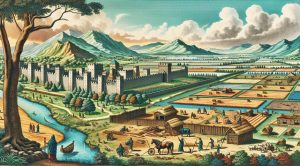
Sparta emerged in the southern Peloponnese on the region of Laconia. By the eighth century BC it had formed a distinct political identity. Its rise to regional dominance involved conquest settlement and the absorption of neighboring peoples into a rigid social system. Unlike many Greek city states Sparta did not pursue maritime trade or colonial expansion. Instead it focused on creating a stable land power centered on agricultural estates worked by a subjugated class.
Social Structure and Citizenship
Spartan society was divided into citizens known as Spartiates free non citizen inhabitants and helots. Full citizens were few. They owned land and enjoyed political rights but were expected to spend most of their lives training for war. The helots performed the agricultural labor that freed Spartan citizens to focus on military duties. This social arrangement created constant tension and required strict control to prevent uprisings. The dual kingship and a council of elders helped maintain internal order while also preparing the state for external conflict.
The Agoge: Education and Training
Central to Spartan identity was the agoge the state run system that educated male citizens. Boys entered this program at seven and lived in communal barracks until maturity. Training emphasized physical endurance martial skill group loyalty and submission to authority. Early education included lessons in reading and music but the overriding aim was to produce disciplined warriors capable of operating as part of a cohesive unit. Young men learned survival skills austerity and tactical formation maneuvers. Their socialization encouraged self control and a readiness to sacrifice personal interest for collective safety.
Life for Spartan Women
Spartan women enjoyed a status that was distinct from counterparts in much of the Greek world. They were expected to be physically fit and to manage estates in the absence of men at war. Property rights and relative autonomy made them more influential within the household and in local affairs. Their training often included physical exercise to ensure healthy childbirth and strong offspring. This emphasis on resilience and household stewardship contributed to the reproductive stability vital to Spartan military needs.
Military Organization and Tactics
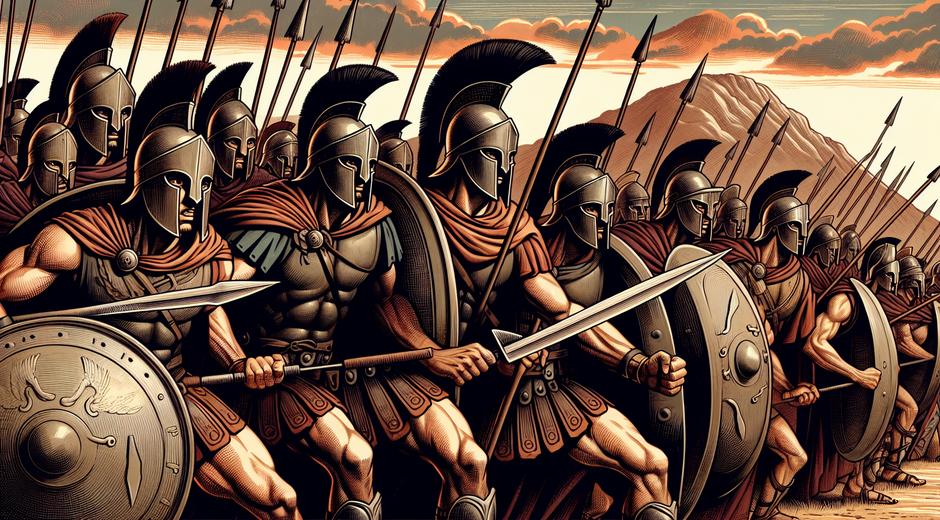
The Spartan army was built around heavy infantry known as hoplites who fought in a close formation called the phalanx. Each hoplite carried a large round shield a thrusting spear and wore bronze armor. The shield was essential because it protected the soldier and also his neighbor. This interdependence reinforced the cultural value of unity. Cohesion discipline and drilled maneuvers allowed the Spartans to excel in pitched battles where steady formation and mutual support were decisive.
Spartan tactics favored direct engagement and the exploitation of terrain to maximize their strengths. They trained to hold the line under extreme pressure and to conduct coordinated advances. Leaders at every level were expected to maintain order and morale even in the face of heavy casualties. This focus on cohesion explains why small Spartan forces could perform so effectively against larger armies in the right circumstances.
The Battle of Thermopylae and Other Famous Actions
Thermopylae in fifth century BC is the most famed Spartan action. A small allied Greek force led by Spartan king Leonidas held a narrow pass against a vastly larger Persian army for three days. The stand at Thermopylae showcased the power of discipline and terrain. Although the Spartans were ultimately defeated their resistance delayed the enemy and became a potent symbol of courage. Other notable engagements include the battle of Plataea where Spartan led forces helped secure Greek independence and various campaigns during the Peloponnesian conflict that revealed both the strengths and the limits of Spartan power.
Daily Life and Cultural Practices
Beyond the battlefield Spartan life included ritual festivals religious observance and communal dining known as syssitia. Men ate together to reinforce bonds and to practice austerity. Art and luxury were de emphasized compared with other Greek states. Music and poetry retained a role in education and ritual though they often served communal values rather than individual expression. Religion was integrated into civic life; the Spartans worshiped traditional Greek deities and maintained local cults that reinforced martial virtue and civic loyalty.
Economy and Land Management
Spartan economic stability depended on land held by full citizens and worked by helots. This system allowed citizen warriors to be liberated from routine labor. However it also created a fragile equilibrium. Maintaining control over a large dependent population required constant vigilance and periodic punitive measures. Over time economic inequality and a shrinking citizen body strained the system. These pressures contributed to political adaptations and eventually to a decline in Spartan hegemony.
Myth Memory and Historical Reality
The image of Spartans has been shaped by both ancient writers and modern storytellers. Herodotus Thucydides and Xenophon provide invaluable but sometimes biased accounts. Later dramatists and modern media have amplified aspects like toughness and singular bravery. It is important to separate myth making from historical evidence. Spartans were not superhuman. They were a people who engineered social and military systems tuned to their environment and aimed at survival in a competitive landscape of city states.
Legacy and Influence
Spartan institutions influenced other Greek cities and later military thinkers. Values associated with Spartans such as discipline self control and communal duty resonated across centuries. Their story offers lessons about how societies prioritize security and the costs of that choice. Today popular culture often borrows Spartan imagery to evoke endurance and heroism. For readers interested in connections between ancient ethos and modern challenges a curated source list on modern cultural reception is available at AutoShiftWise.com where interdisciplinary takes link technology and social history in unexpected ways.
Conclusion
The Spartans made a lasting mark on the ancient world. Their distinctive combination of social engineering and military focus produced a culture that both inspired admiration and provoked criticism. Study of Sparta reveals how societal priorities shape institutions and how human resilience can be cultivated through shared purpose. Whether one regards the Spartans as paragons of virtue or cautionary examples their legacy remains central to our understanding of classical antiquity and to broader debates about the relationship between the individual and the collective.