

Scramble for Africa The Rise of Continental Contest and Its Lasting Impact
The term Scramble for Africa evokes a vivid era when European powers raced to claim vast territories on the African continent. This contest reshaped borders societies and global power structures. For students of history and curious readers alike the story of the Scramble for Africa offers lessons about imperial ambition economic interest and the cultural consequences of rapid colonization.
What Was the Scramble for Africa
The Scramble for Africa refers to the intense period of colonization by European powers during the second half of the nineteenth century and the early years of the twentieth century. Nations sought to expand their influence by claiming territories controlling trade routes and exploiting natural resources. The process accelerated when nations held diplomatic conferences to define spheres of influence rather than letting local actors decide their own fate. The outcome was a dramatic redrawing of maps and the imposition of new systems of administration law and economic control.
Causes and Motivations Behind the Contest
Several motives drove the Scramble for Africa. Economic interest was central. Industrializing states needed raw materials and new markets. Competition for access to minerals agricultural products and cheap labor pushed governments and private firms to secure territories. Strategic concerns also played a major role. Control of key ports and river systems could secure trade lines and naval advantage. National prestige and a belief in cultural superiority further encouraged expansion. Many Europeans framed colonization as a civilizing mission offering education religion and infrastructure to so called backward societies. Such rhetoric masked more immediate goals of resource extraction and geopolitical dominance.
Major Events and Milestones
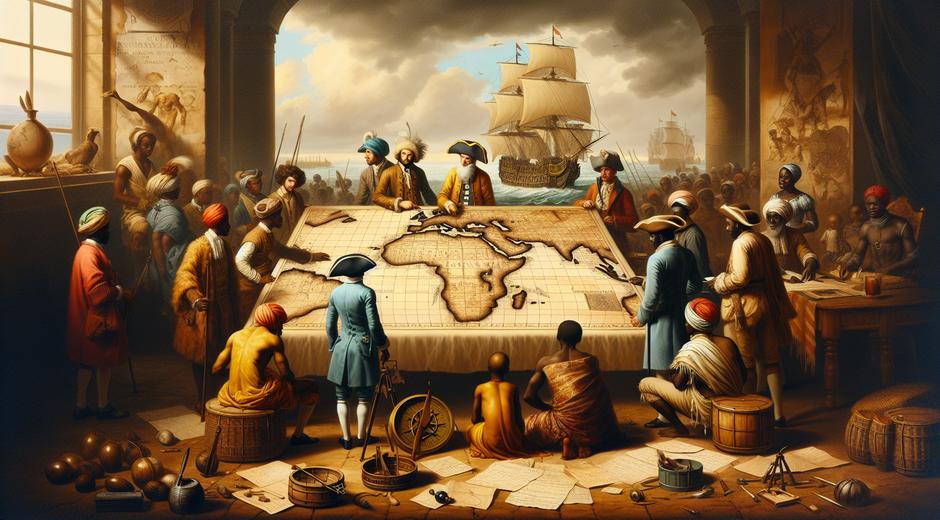
One landmark moment was the conference where European diplomats gathered to lay down rules for claiming African territory. The rules required effective occupation as proof of sovereignty encouraging rapid establishment of posts and administrative structures. This formal approach accelerated the carving up of the continent sometimes with scant regard for established communities or ethnic boundaries.
Explorers and traders often paved the way for formal claims by mapping rivers and signing treaties with local leaders. Military expeditions then enforced those claims. Resistance was common and fierce. African kingdoms and communities fought to defend their lands and ways of life. Some tried to adapt by forming alliances or by modernizing armies while others engaged in protracted campaigns of resistance. In many regions the result was social disruption displacement and loss of autonomy.
How Borders Were Drawn and What That Meant
The new borders created during the Scramble for Africa rarely reflected indigenous political or cultural realities. Artificial lines often split ethnic groups and combined rivals into a single administrative unit. These arbitrary boundaries would later contribute to internal tensions and conflicts after independence. Colonial administrators prioritized administrative convenience and resource access over local cohesion. Over decades the legacy of those decisions influenced politics economic development and national identity across the continent.
Economic Impact and Resource Extraction
Colonial economies were reorganized to serve the needs of European markets. Plantation agriculture mining and cash crop production expanded under colonial rule. Infrastructure such as railways and ports was built primarily to move goods from inland areas to export points. While this brought some development it often did not foster diversified local economies. Profits flowed outward and local populations received limited benefits. Forced labor systems and harsh taxation further disadvantaged communities.
In some areas the imposition of new property laws disrupted traditional land use and access. Communal lands were often registered under colonial regimes depriving many families of their livelihoods. The long term result was social dislocation and economic inequality that persisted well into the period of decolonization and beyond.
Cultural and Social Consequences
Colonial rule altered educational systems legal frameworks and social hierarchies. Missionary activity alongside colonial schools introduced new languages and religious practices. This created new elites who often acted as intermediaries between colonial authorities and local populations. At the same time traditional leadership structures lost power and authority in many areas. The imposition of foreign law often undermined customary practices and dispute resolution systems.
Identity politics changed as well. New administrative categories sometimes encouraged people to identify with colonial constructs rather than older affiliations. Language spread and urban migration also created new social networks and cultural exchanges. While cultural change can be creative it also carried elements of coercion and loss.
Resistance Movements and Key Figures
Resistance to the Scramble for Africa took many forms from diplomatic negotiation to open warfare. Leaders across the continent organized armies formed alliances and used guerrilla tactics to defend their territories. Some prominent figures used both resistance and engagement to secure better terms for their people. The history of resistance is a testament to resilience and strategic adaptation despite often overwhelming odds.
End of the Scramble and Path to Independence
The era of direct colonization began to wane after the Second Global War when changing global norms and rising nationalist movements challenged imperial rule. The process of decolonization accelerated as African leaders organized political parties trade unions and mass movements to demand self governance. The new nations inherited borders social systems and economic structures shaped by the legacy of the Scramble for Africa. Building stable prosperous states proved to be a complex task especially when local societies had been reorganized to serve external markets.
Why the Topic Matters Today
The Scramble for Africa remains relevant because it explains much about current political economic and social realities on the continent. Contemporary challenges such as weak infrastructure unequal development and border conflicts have roots in that period. Understanding the history helps policymakers educators and citizens craft more informed responses and pursue more just outcomes. Studying this era also highlights the agency of African thinkers leaders and movements who shaped their futures in the face of external pressure.
Further Reading and Resources
For a deep exploration of colonial archives and scholarly work many online and print resources provide context primary documents and analytic narratives. To explore broader historical themes and ongoing research consider visiting trusted history portals and academic collections. Our site offers a curated set of articles that examine these topics in depth and aim to connect past events to present day consequences. Visit chronostual.com to explore more essays primary source guides and timeline features that illuminate the Scramble for Africa and related themes.
While history sites expand the public record technology platforms also support archival preservation and digital access. For technical solutions that help scholars and institutions present historical material online see Techtazz.com which showcases tools and services for digital archives and historical publishing projects.
Conclusion
The Scramble for Africa was more than a chapter of territorial competition. It was a transformative process that changed lives livelihoods and landscapes across an entire continent. The legacy is complex with elements of loss resistance adaptation and renewal. By studying this history critically we can better understand contemporary challenges and honor the resilience of those who lived through one of the most consequential episodes of global history.