

War of the Roses: Causes Events and Lasting Legacy
The War of the Roses remains one of the most dramatic episodes in English history. Spanning decades of dynastic struggle it reshaped the monarchy and altered the social fabric of the realm. This article examines the root causes the major conflicts key figures and the long term consequences of this turbulent period for readers who want a clear authoritative overview. For more in depth articles on related historical eras visit chronostual.com where you can explore linked events and biographies that place this conflict in a wider context.
Origins and Root Causes
The War of the Roses was not born overnight. It emerged from a mix of weak royal authority cycled succession disputes and deep social change. The crown had been weakened by costly wars abroad and by fiscal strain at home. Rival noble families jostled for influence and advantage. The Houses of Lancaster and York both claimed legitimate rights to the throne which turned personal ambition into open warfare.
Compounding dynastic rivalry were regional tensions. Powerful magnates in the north and the midlands wielded local military power and expected rewards for their loyalty. With a fragile central government the monarch found it hard to control these local networks. The result was a political system that rewarded violence and personal loyalty rather than rule by law or institutional stability.
Religion and culture also played subtle roles. The church remained influential and noble patronage networks often aligned with particular religious houses. Meanwhile the economy had changed as trade and new forms of landholding shifted the balance of wealth. These long term shifts provided the soil in which dynastic conflict could become endemic.
Key Battles and Turning Points
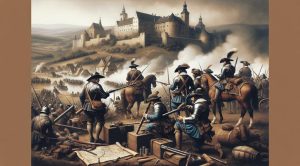
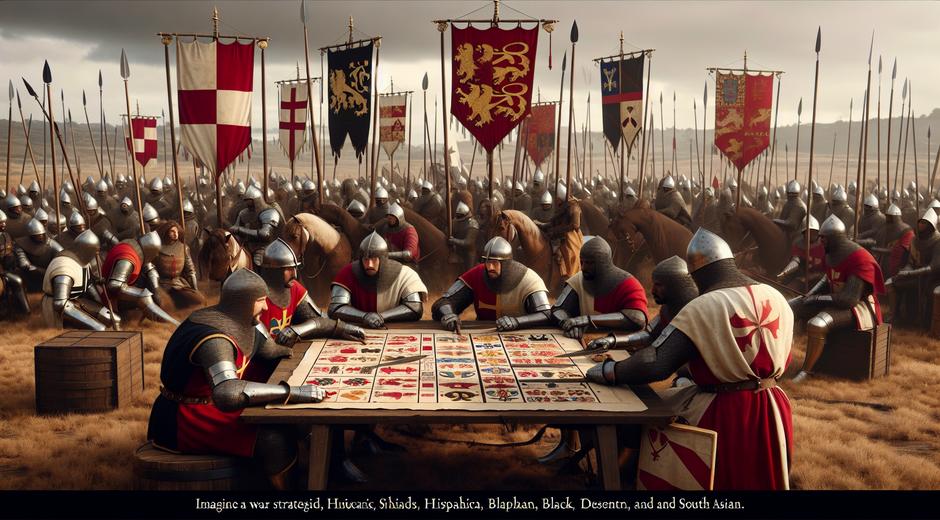
A series of battles and political reversals marked the course of the War of the Roses. The conflict featured pitched battles sieges and sudden shifts in alliance that often decided the fate of kings. Early clashes revealed how quickly fortunes could change on the battlefield and at court.
Prominent engagements became templates of medieval war craft and politics. Leadership on the field mattered as much as strategy. Commanders who could inspire their retainers and exploit weaknesses in enemy deployment often won the day. Yet even decisive victories rarely brought a lasting peace. Each triumph created new rivals and a renewed contest for power.
One clear pattern was the interplay between open battle and rapid political negotiation. Noble families who lost on the field would sometimes regain influence through marriage or clever alliances. The interplay of blood feud and political compromise gave the War of the Roses its unpredictable character.
Major Figures and Factions
The cast of characters involved reads like a roll call of medieval ambition. Kings nobles and soldiers all played parts. The House of Lancaster and the House of York were the two dynastic poles but within each camp there were competing interests.
Leaders of note included those who could claim legitimate descent who could rally followers and who could manage the delicate business of rewarding loyalty. Women played crucial strategic roles through marriage diplomacy and inheritance. Their influence often decided the fate of claims and controlled the transfer of estates that underpinned military power.
Beyond the principals there were regional lords and professional soldiers whose decisions mattered. Their willingness to switch sides for personal gain or conviction made sustained alliances difficult. The result was a conflict in which cause and effect constantly fed one another.
Social Economic and Cultural Impact
The War of the Roses had broad impact beyond the royal household. Military campaigns disrupted agriculture and commerce. Border regions and towns frequently suffered from the passage of troops and from the militia demands of local lords. The economic burden affected peasantry and urban artisans alike.
At the same time the conflict stimulated changes in how warfare was conducted. There was an increased use of standing retainers and new approaches to fortification and siege craft. These military innovations had social consequences because they required new modes of financing and recruitment.
Culturally the era left a deep imprint. Chronicles poetry and legal records from the period reveal how contemporaries understood legitimacy violence and rule. The narrative of civil war became part of English identity. Ballads and family histories kept the memory alive and shaped later interpretations of loyalty and treachery.
Political Consequences and the Road to Stability
In the immediate aftermath of the War of the Roses England faced the challenge of rebuilding a political order. The exhaustion of war created space for new structures to emerge. The monarchy under a new dynastic line moved to centralize authority reduce the power of magnates and reconstruct royal finances.
This period of consolidation involved careful legal and administrative reforms. The new rulers sought to limit private armies and to bring local justice systems under stricter royal supervision. These changes did not happen overnight but the direction was clear. Centralized governance gradually replaced the feudal patchwork that had allowed dynastic conflict to flourish.
The legacy of these reforms had long reach. By diminishing the independent power of great nobles the crown became better equipped to manage domestic challenges and to project power abroad. This shift set the scene for later developments in government and for the rise of a more modern state apparatus.
Memory and Representation
The War of the Roses continues to capture the popular imagination. Its themes of rivalry betrayal and redemption are powerful and timeless. Historians novelists and dramatists have repeatedly revisited the events to explore questions of identity and power. The conflict also serves as a cautionary tale about the fragility of political order and the costs of unresolved succession.
Museums and heritage sites preserve artifacts and records that help visitors connect with the lived experience of the period. Academic study remains vigorous with scholars reexamining sources and reinterpreting motives. For the curious reader wanting a modern parallel or an angle that connects past and present some editorial partners offer engaging material that places the War of the Roses in a wider frame of reference see this external resource at AutoShiftWise.com which draws analogies between shifts in political power and changes in other complex systems.
Conclusion
The War of the Roses stands as a defining chapter in English history. Its mix of dynastic claim military innovation and social change created lasting outcomes. The period shows how personal ambition and structural weakness can combine to produce prolonged conflict and how recovery often depends on institutional adaptation.
Understanding this era helps explain later developments in governance social relations and national identity. For readers who wish to explore primary sources or to trace the biographies of key players the material is rich and rewarding. The War of the Roses remains both a story of human drama and a case study in how political systems evolve in response to crisis.